Search This Blog

Showing posts with label NHS Surgery. Show all posts

Saturday, 17 September 2022

Pain relief? - Not available!

I have a repeat prescription for pain relief because of chronic conditions. Currently I need it more than usual because of very painful mouth surgery & an acute hip problem. The GP sent a medication request for soluble co-codamol out to Rowlands chemist after I was in A&E. They didn't have all the tablets & only gave me some. Now I'm nearly out of tablets & it's a bank holiday weekend.

Rowlands won't give me the remaining co codamol as hard tablets. They say I need a new prescription. Boots told me that the soluble tablets won't be available till November! They won't  give me the hard tablets either because I've already had part of the prescription from Rowlands.

In these circumstances I was told to contact NHS 111 for a new prescription. The wait on phone lines is very lengthy & you are told to go online. The menus to select from & information is also lengthy. So I went through the whole online process only to find that the only way this issue can be resolved is to phone!

So now after a very long wait I've done that. In the meantime Rowlands has closed until the 20th. Boots will close at 6pm. The person I finally spoke to has had to refer me to someone else. She couldn't issue a new prescription. I have to hope a phone call will come & someone will get the pills to me or to Boots before it closes.

 Funny Quotes About Pills

I'm just about at the end of my tether. One of the Pharmacists actually told me to "calm down"! (I was in tears). Presumably reasonably young & fit, not a 77 year old who has been in quite a lot of pain for many days. 

Of course I understand that the NHS has to be careful about prescription drugs. Co Codamol is an opiate. What I don't understand is why I couldn't be given the outstanding pills in solid form by either chemist, given that the soluble ones are not going to be available until November. To have to go through the stressful & lengthy process I just have is more than I currently have the stamina for. 

To my mind the NHS is far too bureaucratic & seems able to tolerate patients pain & discomfort. I cannot understand why I wasn't given any pain medication after the surgery or the day in A&E. Is that a money saving new policy?

It's now 3pm - No phone call. No pills.

3.40 - phone call, prescription issued to my local Boots. I just have to walk there again to get it before they close & hope it has gone through OK. 

I had actually got as far as Summertown when I got a phone call from Boots to say they didn't have any Co codamol. I had to collect the prescription & get a bus into Oxford. I finally got the tablets at 5 pm & got home at 5.30. 

It has taken me all day to get enough pain killers to last until after the bank holiday. It has been unbelievably stressful. What on earth is going on? Why is there seemingly a big shortage of medication? Why do we not keep stocks of vital medication? I didn't have a problem with med's all through Covid. Surely this has nothing to do with the war in Ukraine?


Tuesday, 13 September 2022

A&E - Does it do what the name implies?

I spent about 8 hours in A&E yesterday. 

Suddenly, on Sunday evening, I was unable to put any weight on my left leg. By the time I went to bed I could barely walk with a stick & holding onto things. I spent a sleepless night. I couldn't dress myself in the morning so I phoned 111. They arranged a phone triage with my GP who sent a paramedic round. She called for an ambulance, which arrived in a bit over an hour with 2 more paramedics. So far very helpful, sympathetic, reassuring & efficient.

On arrival at the hospital ambulances were stacked up & there were no wheelchairs available. Eventually, having scoured different parts of the hospital the paramedic found one & wheeled me into a corridor filled with people - Patients, other ambulance crews & relatives. We waited in a queue for my crew to be able to hand me over to a nurse & go into A&E. Only then could they move on and answer more emergency calls. 

NHS rolling out free smartphone app WaitLess that could slash A&E waiting  times | The Sun

One of my crew had spent virtually the whole time with me writing notes & filling in forms on a computer. The amount of paperwork is overwhelming. From a patients perspective I had to answer almost exactly the same questions & give exactly the same answers to every single medic I came into contact with during the day.

Thus far everyone had been really wonderful. Reassuring & informative. It was a possible hip fracture from a fall days ago & I needed an x ray. Just what the doctor ordered!

Then the long wait in a waiting area began, from sometime just after 1.45. Various standard tests were done by nurses. A very kind nurse offered me a sandwich & small carton of orange. All I had had up to that point was a mug of tea first thing. The only meds I had taken were my own painkillers before setting off in the ambulance. One of the paramedics said that it would be a bumpy, painful ride.

The staff were very busy. Medics don't walk slowly. The majority move about really quickly. I really don't know how they maintain the energy levels. Patients were coming & going all the time, some in hospital beds, some in wheelchairs, some walking wounded.

Hours went by. Sitting in a hospital wheelchair, unable to move when you have a possible fractured hip is not comfortable. I had raised blood pressure because of the pain. I didn't have a temperature, but kept getting hot sweats. I couldn't believe the length of the wait with no information, no meds & no one asking if I was OK or needed anything. Fortunately I hadn't drunk enough to need to go to the loo!

Eventually, after hours, I asked someone scurrying by what I was waiting for. I needed to be seen by a consultant before they could do the x ray. He wanted me to be xrayed in a hospital bed so I had to wait for one to be found. One wasn't available, so just after 7pm they took me to xray. I had to get out of the wheelchair & onto the x ray table. It wasn't easy.

Then a wait to see the consultant for the results. I was finally seen around 7.15. It wasn't a fracture. It was probably a particularly bad flare up of Fibromyalgia / Osteoarthritis / GTPS. 

I have absolute confidence that NHS staff do their damndest in very difficult conditions. I have nothing but admiration that they do this very difficult job day in & day out. I am not surprised that many move on to other jobs.

Having arrived by ambulance in my pyjamas & slippers, fortunately my daughter could collect me & take me home, utterly exhausted. A mug of tea & finally some painkillers & a bit of TV before being able to blissfully lie down in my bed.

The patient experience in the NHS is critical to improving it for the staff & patients alike. I don't understand why I was given no pain relief on Friday when I had oral surgery to remove a lesion for biopsy or yesterday. Only prescription meds relieve the sort of pain I have experienced over the last 5 days. Paracetamol is about as useful as Smarties. I would have given anything to be able to lie down for the hours of waiting in A&E. The wheelchair just added to the pain & discomfort. I certainly would have liked a cup of tea & more information. We waiting patients were in full view of all the staff for hours. Some of us for a lot longer than others. 

A&E has to prioritise - I completely get that. The most serious have to be seen first. Although there seemed to be a lot of different staff doing different jobs, there are obviously not enough critical staff - senior nurses, doctors & consultants, to move patients through quickly. But worse than that, there aren't enough beds, facilities & equipment for patient numbers. 

It seems to me that it is a perfect storm. Add to that Brexit's impact on staffing, Covid, financial meltdown since 2007 /8 & we are in a perilous situation. Patients will suffer & possibly die. Staff will be demoralised & exhausted trying to make a very imperfect system work. They will leave & our training places at UK medical schools are capped - in England this year there are 7,500 places.

Until the politicians get to grips with fully resourcing the NHS patients will suffer & staff will give up. 

Thursday, 13 June 2019

DNR - Do Not Resuscitate

If your doctor has written a DNR order at your request, medics are not required to resuscitate you if your heart stops. It is designed to prevent unnecessary suffering & your family may not override it. DNR can be regarded as passive euthanasia.

Image result for Images for Jokes about DNR

It is another medical ethics situation where, just because it is possible to prolong life, which is what medics are trained to do, it may not be the right thing for the patient. Everyone who is going to have surgery should think about what they would want to happen should their heart stop & should make clear their wishes, not only to their medical team, but also to their family.

That said a lot of people simply do not want to think about what might happen. They may be more focussed on just coping with the surgery itself. They may be too ill to think about DNR. They may be unconcious. In reality very few people go into hospital having made the decision. That means if there is a problem the medics or the family decide. The family may not be best placed to make the very emotional decision, especially if they have not been prepared for a relative to die & said all that they would want to say.

I think the important thing is what sort of life the patient had before surgery & is likely to have after surgery. In my case I'm 74. I've lived a very fulfilling & interesting life & have lived alone for 10 years. I have a shedload of co-morbid chronic conditions, including heart conditions, & pain & fatigue on a daily basis.

Life generally doesn't get easier as you age, whatever your health is like. Just because the average life expectancy for women in the UK is 83 - 86 (depending on the stats), & many live much longer, doesn't mean that is a good thing. 

What matters is the quality of that life - how happy or contented you are, whether you are able to socialise regularly with good friends & family, whether you are able to manage the day to day things we all have to do, whether you are reasonably healthy & active, whether you feel that there is a purpose to your life....I could go on & on.

So, I think it's a gamble - Cling to life on the basis that it's the only one you get, (unless you believe in reincarnation) - Or risk a possible slow decline or even an unpleasant one. Or "check out" gracefully without any pain & find out what, if anything, is on the other side. 

It seems a no brainer to me.

Friday, 7 June 2019

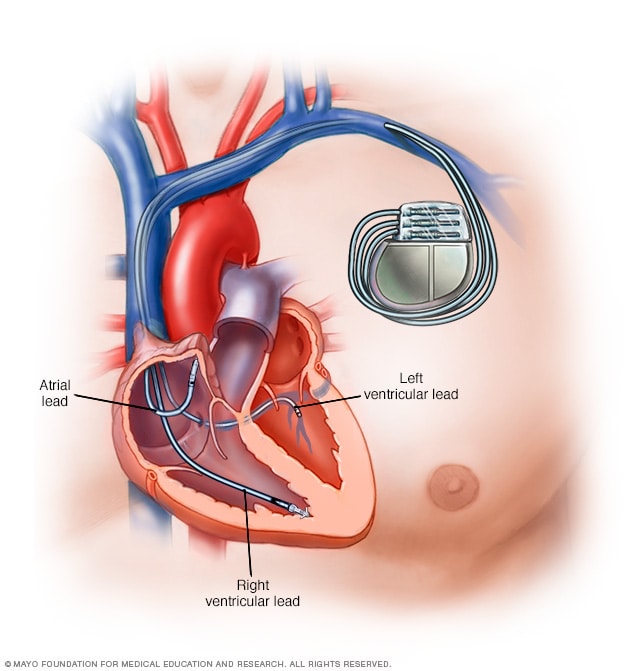
Bionic Woman - My Pacemaker & Me

I had a pacemaker fitted in 2009. https://www.bhf.org.uk/informationsupport/treatments/pacemakers  So I've been Bionic for 10 years.

Now it's got to be replaced. Without it I would be I trouble & I think I can tell that it needs replacing. I'm getting some weird symptoms which could well be attributable to the heart conditions I've got.

I have Complete Heart Block / Arrhythmia / Bradycardia - Paroxysmal Atrial Fibrullation & a Floppy Mitral Valve. Once again evidence that God had an off day when she made me! Why have only one heart problem when you can have a whole set?!

Anyway the message is good. The surgery is fine. You are awake & only have a local anesthetic. That said, all you can feel is fairly strong pressure as they push the device firmly into the shoulder. It did seem to be a tight fit & went on for some time, but it really isn't a problem. I think I remember  feeling the wiring going into the heart, but I'm not sure. Fortunately that doesn't have to be replaced - only the actual pacemaker box.

I find the whole thing amazing. The technology, the skill of the surgeons & the fact that someone invented this relatively small device that can keep me alive & kicking, (well, maybe not actually kicking). It is battery operated. So, presumably, am I.
Image result for Pacemakers 

It sounds so worrying, heart surgery, but this really isn't. It's quite simple, it doesn't take that long & it works. The amazingly named William Greatbatch, an American electrical engineer, invented the first implantable one in 1958. So there has been plenty of time for them to be sure they work & iron out any little glitches! Always reassuring - my pioneering spirit doesn't stretch as far as trying one out for the first time. 

I look forward to 10 more years of a perfectly beating heart! Not everyone can say that. Good old NHS.


Sunday, 6 August 2017

A Patients Journey - 6

Two months on from surgery I went swimming for the first time on Friday. No real problem, I did half the lengths that I would normally do. I was almost on my knees by the time I walked home though. Now I need to build up my muscle strength & stamina.

My dissolvable stitches didn't. I pulled the last one off last night. Fortunately it didn't bleed much. I think the spray on skin may stop the stitches dissolving.

No infection, just a bit of intermittant spotting.

I haven't heard anything about the biopsy results, so I assume that's good news. Presumably they would contact me if there was anything to be concerned about.

All good news then. Just under three weeks to get in shape for my month working in Malawi & the very long, (2 day) flights.

The miracle of modern surgery shouldn't be taken for granted. We have anasthetics, drugs for pain relief, skilled medics, wonderful hospitals - All free at point of need.  But for how long? Privatisation is already worming it's way into state provision at the behest of a Conservative Government who believe that is competetive & will save them money. Instead of looking to the USA & copying, they should look below the surface & interrogate what is really happening to patients there.

It is the patient that matters. Not the medical hierarchy, politicians, or company CEO's. I've been fortunate - A lot of people aren't.


http://www.wolfescape.com/Humour/MedThumbs/TrustTheseSurgeons.gif


Monday, 17 July 2017

A Patients Journey 5 - Recovery

10 days on from surgery. The worst is over. The surgery pain has subsided to the extent that I don't need to take additional pain medication on top of what I already take for chronic pain. Going to the loo is no longer painful. I can walk & move about quite normally. I can do most things around the house for myself. I can walk to the shops & back. All good news & much as I expected. I never tend to anticipate the worst case scenario will actually happen.

I can't sustain activity for very long - I don't have the energy. I am exhausted & need to sit down after washing up & making my bed. My gut is still disturbed especially after eating. I also don't have the energy to concentrate on things for long periods. I'm forever forgetting things & losing things - I still can't find my MP3 player which I've been looking for for days. I'm a person who is normally on the go & at the moment I'm feeling I can't be bothered. I'm ignoring my "to do list" - That's highly unusual.

I'm still dropping off to sleep throughout the day - sometimes actually at my computer keyboard, often watching TV in the evening. So annoying - I'm missing things I have recorded because I really want to see them & keep having to rewind.

But - if I'm honest a lot of these things are my normal. I've lived with chronic pain & fatigue for years. They are just worse.

Given that this was quite major surgery I don't think this is bad.

It is difficult coping with something like this on your own. It's always much better when there is someone else around. But I think this is the new normal. According to the Office for National Statistics "in 2016, around 7.7 million people lived alone in the UK, the majority were women". The best figure I can find for the adult population of the UK is 53 million in 2012. That would mean roughly one seventh of the adult population live alone.

The old values that I grew up with no longer exist. Society has changed out of all recognition. We, as a society, need to decide how we are going to deal with this demographic. It is going to get worse & it will cost money. Everyone has the right to be properly supported & cared for in infirmity, whether it's permanent or temporary. Family & neighbourhood structures have changed for good. We need something to replace them.
Image result for Quotes about living alone

Sunday, 16 July 2017

A Patients Journey 4 - The First Week

Sun - I had a really good night's sleep my first night out of hospital at M's.

It was really difficult & painful  getting in & out of a convertable bed settee because it is much lower than mine at home. It was also difficult going to the lavatory, because mine at home is wall hung higher than normal. You can't rush after an op, so need to give yoursef plenty of time!

M took me home after breakfast because there are end of term school "do's" at lunchtime, in the afternoon & the evening. So I might as well be at home with my own things as being in her house. I'm actually safer because I  have a personal alarm at home in case anything happens when I'm on my own.

It would have been my 51st wedding anniversary & is the day that David died. I can't believe that it's 8 years ago. Sometimes is seems much longer, sometimes just yesterday. It is true, life does go on.

Mon - M popped in this morning & we walked to the chemist to pick up some of my meds. I sat on a bench while she got some food from M&S for me. By the time we walked back I was completely exhausted. My legs felt leaden. At least I've got some idea of my limitations. I felt very nauseous today. Not sure why - I would have thought that the anaesthetic would have worn off by now. Watched / slept through tennis in the afternoon!

Tue - M popped in again today. She is going on holiday to Italy tomorrow morning & still hasn't packed! Felt nauseous again & slept through tennis again. It's like a light going out - One minute I'm awake then I wake up & have missed a set.

Wed - I was shocked to be bleeding this morning. Going to the loo has been painful since the op, but I've not really had any "spotting". I phoned the Gynae ward & they were very re-assuring & said just to monitor it. It is good to have been given a direct contact number. It didn't continue. It would happen when M isn't here, but my friend A is coming later to stay for a couple of nights. I'm quite relieved not to be on my own & she is very unflappable. She went off to see the Raphael exhibition in the afternoon & I spent another afternoon not watching the tennis. It's ironic - can't seem to stay awake however interested I am in the match.

Thurs - It's good having A here. I'm a big believer in "Distraction Technique" & having someone to talk to & share meals means I don't think about how I'm feeling. Still feeling nauseous in the afternoons.

Fri - A week has gone by. A went home after breakfast, having taken me to drop a urine sample off at the surgery. I will miss her calm presence.
Minor panic after lunch. My stomach became more & more uncomfortable & swollen. Couldn't bear to wear the leggins I had on. I phoned the ward & they said to get an emergency appointment to see a GP.

That was interesting - the receptionist didn't seem to be able to understand what I was saying. In the end she said a doctor would phone. (I had told her that the hospital had said I needed to be seen by a GP today). The duty GP didn't seem to be any more capable of taking the information in than the receptionist had been. (I don't think I was incomprehensible, but I suppose it is possible).

He gave me an emergency appointment for 4.40. That would be about 3 hours after I first phoned.

I live alone, my daughter, my best friend locally & my neighbour are all away & A has gone home. I have just had major surgery & can't walk very far - not to mention that I am 72 with a heart condition - So I would have thought that our NHS would think that this justifies a home visit. No way. Get a taxi the GP said, knowing full well that the surgery is surrounded by double yellow lines & is on a cross road of 2 main roads, so it's unsafe to pull in & drop someone off close by.

By the time I actually saw a doctor I was fortunately feeling much better. She was thorough & concluded that it was probably trapped wind, (because it had subsided quite quickly). So monitor it & hope it doesn't return. That's the conclusion I had come to, but it was reassuring to have it confirmed.

Sat - I do seem to feel uncomfortable after eating, but not as bad as yesterday afternoon. I suppose all my intestines have been moved around during the surgery & having food to deal with causes problems. However the good news is that I have stopped taking the additional pain killers today & am just taking my normal pain meds. So all in all there is progress day by day. I have a "Do's" & Dont's" list on my wall to remind me to take things easy.

I would say that I'm recovering really well for an old bird.


Saturday, 15 July 2017

A Patients Journey 3 - The Day After

Saturday mornings are quiet on the ward. Not many patients - 3 in a ward with 6 beds. Lots of checking of paperwork & screens.

The woman who was admitted & treated in the night seems to have an infection which developed after surgery. She had a high temperature, but seems much better this morning.The American student, who drove me mad on her computer last night, seems fine & is pressurising staff about having her op today. She doesn't seem to grasp that non urgent procedures aren't done at the weekend to fit into her busy schedule. Eventually I think she went home.

Staff are infinitely patient, unlike impatient patients. I was shocked to discover that nurses do 12 hour shifts & alternate day / night rotations regularly.
http://www.birminghammail.co.uk/news/midlands-news/nhs-crisis-diary-student-nurses-8279420
It can't be good for their body clocks. How can they possibly remain alert & give patients the care they need? The only reason for it I can see is financial, or there simply aren't enough nurses to do shorter shifts & better rotations. It's can only be a short term solution - nurses will leave, because no one can keep that up indefinitely.

I'm better than I thought but surprisingly tired by showering & answering emails on my phone. Relaxing on a very comfy, adjustable bed is lovely.

The surgeon comes to do the after surgery check & says I can go home - all the boxes are ticked. M comes to get me @ 11.30 in between the last day of term events at school. The journey home on Oxford's dreadful roads is very jarring & painful. By the time we get to her house I'm gripping the sides of the seat.

I have a little lunch, a mug of tea & a handful of pills then collapse on the sofa to watch the TV. M departs & then I doze through the tennis all afternoon. It is difficult & painful to move, but it is important to try to walk a bit.

M & the boys come home for supper. D & D come for a drink to see how I am, which is kind & a very cheerful interlude. Then the boys & I watch TV in the evening while M & E go to another end of term "do". The boys & I go to bed at the same time - I am completely exhausted & desperate to lie down. The pills do dull the pain, but there is still continuous nagging pain with intermittant acute pain when I move or try to do something, like getting into bed.

Sleep eludes me so I hear M coming home.                     

Friday, 14 July 2017

A Patients Journey 2 - Overnight

Well - being next to the nurses station is a mixed blessing. I was really tired by about 10pm & thought sleep was just a blink away. Not so. The nurses loud, inconsequential, chatter & laughter was just continuous. There was also a machine periodically - shredding all the paperwork? Maybe it isn't obvious that patients need quiet & sleep to recover.

In the end I pressed the button to call a nurse to take me to the loo. Afterwards I asked, in the nicest possible way, whether the lights would be turned down & it would be quieter soon.

So I did manage to drop off afterwards despite the oxygen & compression boots.

I was woken @ about 2.30 am by a bright screen in the opposite bay & someone tapping continuously on a computer keyboard. So I rang for the nurse again to go to the loo - They let me go alone. When I got back I asked, loudly enough to be heard, what the machine was in the opposite bay - I knew it was the occupant on a computer - must have been admitted since I went to sleep. Fortunately the noise stopped or I might have done physical harm. I later discovered that it was an American student at the university - didn't seem to be ill, waiting for a procedure which was interfering with her life, as I might have done had she not developed some consideration for other patients.

I was then too awake & couldn't sleep because of a loud ticking clock - It must be possible to have quiet clocks on wards.

I dozed again & was woken @ 4.30 by another admission to the ward who was bein treated. It sounded quite urgent. I felt very sorry for her. All the machines that medics use all have a distinctive sound - all very tuneful except if you are trying to sleep. I wondered why they need to make any sound at all - isn't it obvious if they aren't working?

At 6am the day begins. Obviously they don't realise that I'm not a morning person - especially when there has been too much night & not enough sleep. The checks reveal that I am still alive. It is good to make it to the loo unaided, but painful to pee.

Breakfast is a welcome cup of tea, (my mouth is very dry & tastes awful), & an overflowing bowl of bran flakes. I give up about a quarter of the way through.

A welcome shower & tooth brushing - Who would have thought that could completely transform how I felt about the world. Came back to fresh sheets & a proprtly made bed - Blissful!

Tuesday, 11 July 2017

A Patients Journey through NHS Surgery - Day 1

I was admitted to the JR last Friday for Bilateral Laparoscopic surgery to remove both my ovaries, which each have a 5-6cm cyst. I had to be there, clutching a urine sample & my paperwork, starved & showered at 7.30am. My daughter took me & stayed till it became obvious it was going to be quite a long wait. It was a school day, so she was teaching - Waiting would be pointless.

I can say with complete truth that I wasn't at all nervous. Modern anaesthetics are really good - it's the aftermath of surgery you have to be concerned about - Especially at my age & with a heart condition.

The whole pre surgery thing is like a dance with different partners. All giving slightly different information, but asking similar questions. 1st welcoming area -> 2nd waiting area -> 3rd private waiting area  - Staff Nurse - questionnaire & wrist bands, am I really me? / Later same area but with Anaesthetist / Later still same area but with Surgeon, (signing consent form). That all took from about 7.10 - 11ish. I was finally left in my little blue curtained world to wait to be called.

I was third on the list, but it was a long wait. You do wonder what is happening - have they forgotten you, is there a problem / emergency - will the surgery go ahead? The medical staff are continuously busy - no one seems to walk slowly. The last time I noticed before I was called was about 12.15.

Then the walk to the operating theatre.

I had a hilarious conversation with my anaesthetist & surgeon about which books we were reading / had read. (I asked them to do me a list of authors when they had a spare moment!) They inserted a cannula & that was the last thing I remember until I was on the ward & it was all over.

I was offered cups of tea - nectar of the Gods, & an eggy sandwich - couldn't eat it, my mouth was so dry & it was like trying to eat cardboard. Throat dry & sore. Everyone says it, but it's true, the staff are wonderful, (with an odd exception, but everyone is allowed an off day).

My daughter & grandsons visited & that was very entertaining. The boys wolfed down my food - they had come from sports day. They were very interested in my drip & cannula, (T noticed that it had blood in, so the nurse took it out when the drip bag was empty). Also in my oxygen feed & my electric Flowtron Boots on my legs - These are in addition to the tasteful compression stockings you wear. Both hopefully stop an embolism. It would be a shame to die when the surgery had been successful, such a waste of time & skill.

I asked to go to the loo at about 7pm, but the nurse brought a commode the first time. (I seemed to have no real urge to pee, despite the cups of tea & glasses of water, & it was quite difficult & uncomfortable. No bleeding though). Peeing after surgery is one of the boxes you have to tick. They actually measure your pee output!

Overall I felt OK. Moving was difficult & painful, but that's what I expected. Not permanently gripped with pain, so the drugs were working & presumably the anaesthesia too. The beds are infitintely adjustable & very comfy - I would really like one at home, but wouldn't know how to go about it. Normally I'm woken by pain hourly or less. Being more upright or having my knees raised would help a lot. The bed is about the only thing the patient has control over

There is absolutely constant activity on the ward. It all seems very purposeful & organised. A lot of form filling & reading & screen checking / inputting data. Medics all seem to walk fast, somewhere to go / someone to see - No one ambles. Nurses make regular checks on patients - BP, temp, oxygen, wounds.

The mix of nationalities on the ward is interesting in the light of Brexit - British, Asian, Eastern European & Black. Overwhelmingly women except for doctors & cleaners.

Eventually everyone else in the ward was discharged about 8pm so a private room for Friday night, but right next to the nurses station. How convenient is that - I expect they had worked it out.

Wednesday, 5 July 2017

Pre Surgery

Well it looks as if my surgery might go ahead this time - on Friday. I'm on tentahooks, not because I'm worried about the actual op, because I don't want it to be cancelled again. The worst part will be how I feel afterwards.

I stop taking my anti-coagulant today - don't want to bleed out on the operating table!

I need to think about what I have to take, bearing in mind that there's just a small, unsecure, bedside cabinet. You might think it could be possible to put some sort of lock on it - but apparently not. I guess the chances of having stuff stolen, given that there are people around all the time, is low. But the other patients & I won't exactly be compos mentis & presumably the staff are quite busy.

I'm trying to tick things off my to do list. I'm also trying to ensure that I've got stuff to eat & don't need to shop or think about anything other than fresh food like fruit & veg. I cooked a lot of Tagine last night & have ordered cook chill food from "Cook". I hope there is enough room in my small freezer. I might have to ditch some things.

It's a question of thinking & planning ahead really, when you don't really know how bad the after effects will be. The leaflet they gave me is pretty comprehensive though & I'll know soon enough!

Saturday, 1 July 2017

NHS - Postponed Surgery

Having your surgery postponed causes all sorts of issues for patients. There is a knock on effect on your life & the arrangements you have to make. For some it extends the anxiety.

My surgery was cancelled because there was no anaesthetist available.

I think hospital rotas should be flexible so cover can be arranged. When NHS managers know days in advance that someone can't come in & there should be some slack in the system, with cover - like supply teachers. It's a question of paying for enough doctors to be able to deliver a health care service. We should be pressing for good health care for everyone at point of need.

Most recent Postponment Statistics for England for cancellation of elective surgery:-

Quarter 1 - April / June 2016/7  - England
Number of last minute elective operations cancelled for non clinical reasons - 18,730
Number of patients not treated within 28 days of last minute elective cancellation - 1,575

Quarter 2 - July / September - England
Number of last minute elective operations cancelled for non clinical reasons - 19,446
Number of patients not treated within 28 days of last minute elective cancellation - 1,228

Quarter 3 - October / December - England
Number of last minute elective operations cancelled for non clinical reasons - 21,247
Number of patients not treated within 28 days of last minute elective cancellation - 1,550

Quarter 4 - January / March - England
Number of last minute elective operations cancelled for non clinical reasons - 21,219
Number of patients not treated within 28 days of last minute elective cancellation - 1,668

That's 80,642 operations cancelled in one year in England alone.​

In December 2016, across Hospital and Community Health Services (HCHS), the NHS employed (full-time equivalent): 106,021 doctors; 285,173 qualified nursing staff and health visitors; 21,604 midwives; 131,791 qualified scientific, therapeutic and technical staff; 19,392 qualified ambulance staff; 20,858 managers; and 9,866 senior managers.​ The population of England is 65,511,098 - so patently that isn't enough doctors.​ I think that's one doctor for 617.90681 lets say 618 people. Obviously many of those doctors will be GP's not hospital doctors. 

I'd be interested to know how those statistics compare to European & Scandinavian statistics, but am hungry so can't research further.

There is a problem - with the current demographics it will only get worse. The time to find a workable solution is now. It can't be beyond the wit of man.

Hopefully my surgery will take place 4 days late. That's a Friday - are they still going to be able to keep me in for 1 -2 days over the weekend??? I have no idea.


Thursday, 29 June 2017

In Praise of the NHS, (Maybe) - Computerised Records?

I had a pre - op assessment yesterday. Surgery due on Monday 3rd - removal of ovarian "cysts".

Got there early - seen immediately. 2 whole hours with a senior nurse & a student. Masses of paperwork, a very full medical history + Bloods & an ECG. The nurse was brilliant - she really knew her job.

It was the amount of paperwork that amazed me. I have had several operations over the years, sterilisation, laparoscopic knee surgery, removal of a big non malignant lump on my shoulder, removal of a cyst on my foot, a pacemaker, removal of my gall bladder & stones. No one has ever been so thorough. I am seriously impressed with the nurse & the NHS.

Hopefully I won't be bumped on Monday. I will be in hospital for 1 - 2 nights, (because I live alone & am 72 with a heart condition). It will take up to 2 months to completely recover. I will be glad to get it over.

My point in blogging about this is that things have changed - Good. I just wonder why all of this was on pieces of paper?

I am a "thick file " "heart sink" patient. I have several chronic conditions - I won't get better - I just have to manage my conditions with the help of the professionals & medication.

It just seems strange that NHS patient records aren't fully computerised & therefore accessible to all medics wherever a patient might need to consult a doctor or nurse. (This nurse wanted a complete medical history, with dates, & I couldn't remember. I have written my own, but didn't know they would need it, so didn't have it with me).

There must be duplication of information. I imagine it's a big, time consuming job - but it will have to be done sooner or later. So why not now? Could it be that there isn't enough money??? If so it's a short term saving which will eventually turn into a costly error. The doctors on "Holby" have tablets - I haven't yet seen any in hospitals I've been a patient in. The Government & the NHS needs to bite the bullet. Computerisation has been here for a long time now. Our medics deserve a modern system.

PS
I've just been bumped to Friday7th!!!!!  No Anaethetist!

When I was a Headteacher we had to get supply teachers in if a member of staff was unavailable. We didn't just tell a class that they had to go home or not come in. I simply don't understand why the NHS doesn't re-jig rotas or have a similar system. Is it reasonable to just "bump" patients & leave them to cope with the fall out? Although this could be cancer, the chances are it isn't fortunately. That isn't the point - is this yet another money issue?

Really disappointing & I fly out to Malawi on the 24th August to work with the MicroLoan Foundation, so it's a worry.