Search This Blog

Sunday, 31 May 2026

Violence & Abuse.

I am quite ashamed to say that I smacked my daughter when she was little. I also smacked children when I was a teacher. There is no defence. Not even that it was" normal" at the time, (it was the 60's). I had been hit as a child & a teenager. Naughtiness does not warrant physical punishment. What child isn't naughty?

Thank goodness we know better now. Any physical violence against anyone is unacceptable. So if we know better, why are we such a violent society & world? Why are some people unable to control their emotions to the point that they will hurt & injure others? Even kill?

There are 3 main types of violence. Physical violence occurs when someone uses their body or an object to control a person's actions. Sexual violence occurs when a person is forced to unwillingly take part in sexual activity. Emotional violence occurs when someone says or does something to make a person feel stupid or worthless. The Council of Europe Istanbul Convention lists 10 types of violence.

https://www.coe.int/en/web/gender-matters/types-of-gender-based-violence

Statistics for violence against women are deeply concerning. In 2025 an estimated 840 million women, almost 1 in 3 have been subject to violence according to https://www.unwomen.org/en/articles/facts-and-figures/facts-and-figures-ending-violence-against-women  In 2024, around 50,000 women and girls worldwide were killed by their intimate partners or other family members. It is shocking.

Then there is war.  

According to the latest VIEWS (Violence & Impacts Early Warning System) forecast for state-based armed conflict, the estimated number of battle-deaths in 2026 is: 

  • Ukraine: 28,300
  • Palestine/Israel: 7,700
  • Sudan: 4,300
  • Pakistan: 2,000
  • Nigeria: 1,900
  • Ethiopia: 1,800
  • Somalia: 1,700
  • Syria: 1,400
  • Yemen: 1,300
  • Burkina Faso: 1,200

Global conflict data for 2025 / 26 indicates that tens of thousands of civilians & combatants have been injured across multiple major ongoing wars. Because of the chaos of war, exact comprehensive global figures are impossible to compile, but specific conflict zone reports give a clear sense of the scale.

It is difficult to avoid the conclusion that we humans are becoming more violent & uncontrolled. According to international statistics men are responsible for 85 - 90 % of violent crime. In the UK for attempted murders, serious assaults, and robberies, women makeup only a small fraction (often under 10%) of arrests for these specific offences.

We need to ask why some men are so violent. It's a complex interplay of biological factors, socialisation, and gender norms. It is important to understand that while men are statistically the primary perpetrators of violent crime, the vast majority of men are not violent.

  • Testosterone promotes dominant & status seeking behaviours.
  • The pre frontal cortex, which regulates impulse control, develops differently. Sometimes predisposing boys to be more physically reactive to stress.
  • Boys may be socialised to traditional masculine ideas of toughness & dominance.
  • Boys may be socialised to suppress emotions. 

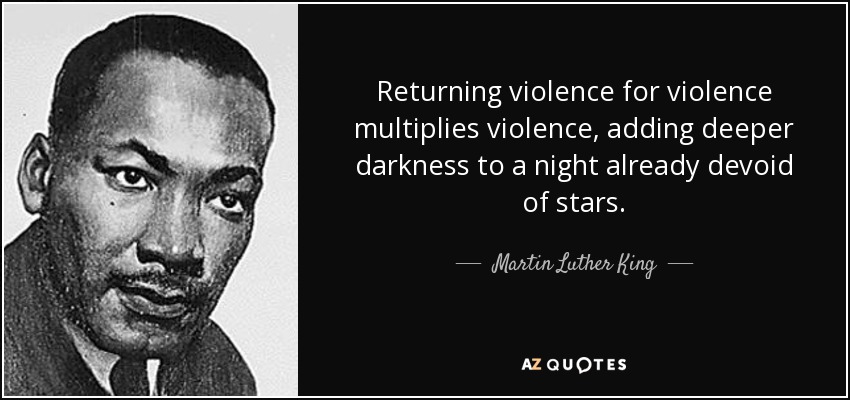
Whatever the causes, routine violence seems to me to have increased over my lifetime. Almost to the point that we accept it as the norm. It isn't normal. It isn't acceptable & we should be doing more to stop it.
https://www.azquotes.com/picture-quotes/quote-returning-violence-for-violence-multiplies-violence-adding-deeper-darkness-to-a-night-martin-luther-king-86-74-47.jpg 


Thursday, 28 May 2026

"Dear England", Tolerance, Machismo & the Internet

Over the years I think I have changed a little. I think I have become more measured & tolerant. This may well be a complete delusion, but I hope not. If ageing brings anything, surely it should be experience & understanding leading to tolerance.

Watching the BBC drama doc "Dear England" made me think a lot about masculinity as well as football. I have to admit football is a closed book to me. But I do understand the concept of team playing. I also admire the dedication & skill of any elite sportsman. But I was made to think about the pressures on everyone involved in elite sport. It is so easy to dismiss footballers as overpaid, entitled & full of machismo & self absorption.

This well acted drama made me think again. 

In a way it is a commentary on maleness. It highlights the weight of expectation on not just athletes & teams, but on the whole infrastructure around them. That in turn makes you think about what it is like to grow up as a boy in today's society. I would never have contemplated the lifelong trauma of missing a penalty & losing a game without watching "Dear England". I hope I intellectually understand the sheer destructiveness of racism. But this drama brought home it's cruelty & mindlessness - It's bullying. 

The lessons this production teaches are not just related to one sport. We see the vulnerability & emotional reticence of being a boy or man in 21st century England. Where does this begin?  Well it seems obvious to me it begins in the home. It begins with parenting. It begins with the role models of parents & family. It is definitely related to what we all expect a boy or a man to be.

https://rts.org.uk/sites/default/files/styles/12_column/public/article/2026-05/Untitled%20%281300%20x%20700%20px%29%20%2814%29.png?itok=DaiBTVij 

A football pitch is a huge space, as is the world we live in. Finding your place in it can be very difficult. 

We think we have become more tolerant & understanding & Southgate, who was England manager from 2016 - 2024, certainly shows us a different way to be masculine. But somewhere along the way we have gone wrong. It isn't a new thing. Why is there still such a difference in the way that girls & boys are parented? 

The average age of first exposure to pornography for boys today is between 10 and 13. Roughly 50% of boys are in that statistic. What does that show about how those boys have been brought up? Pornography normalises unrealistic sexual expectations, distorts views on consent, and impacts adolescent brain development and impulse control. By age 16, approximately 70% of boys watch porn multiple times per week, resulting in higher rates of emotional disturbance, anxiety, and problematic sexualised behaviours.

The reason for that previous paragraph is children's easy access to the internet & social media. Laptops, iPads & mobile phones put unacceptable content right into the hands of children. The tech billionairs are so driven by profit that they do not face up to the fact that they destroy lives by not adequately policing what children can access. 

So we as adults, parents & politicians must force them to take responsibility for the harms. But we must take a measure of responsibility too. We have allowed this to happen.   

Monday, 25 May 2026

Difficult Conversations

The dilemma of how to say something to others, when you know that it may, at best, be taken the wrong way & at worst cause confrontation, argument & hurt, is difficult to handle. The judgement call is a fine line. Should you say anything at all? Should you just "bite your lip" & pretend the problem doesn't exist? Should you be true to yourself & face up to the issue?

I don't think there is a straightforward answer. There are so many variables - the personalities involved, the importance of the issue, the circumstances surrounding it....My gut feeling is always to bring things out into the open & discuss them. But I know that is a touch selfish, because I am not good at going along with something I don't agree with for a quiet life. The issue nags away at me. It may keep me awake at night. I go over conversations in my head. Especially when it involves people I love or like a lot. 

But life is not straightforward. Life is a bumpy ride. We all need to learn how to deal with problems, arguments & confrontation. We all need to be true to our own sense of right or wrong - of fairness. We also need to learn how to broach issues in a tactful & sympathetic way, trying to be rational & keep emotion at bay. In order to do it well we need to listen as much or more than speak. We need empathy & understanding. There are far more grey areas than black & white ones. 

We also need to be able to apologise if we are wrong or accept apology if the other person is. We need to be able to forgive. As Alexander Pope said "To err is human, to forgive divine". 

The thing that concerns me about politics today is that politicians don't seem to be able, or allowed, to "Speak truth unto Power". This means courageously challenging authority, calling out injustice, or sharing critical feedback without fear of retaliation. It originates from a 1955 civil rights and pacifist pamphlet by the American Friends Service Committee. Which is ironic when it seems that few people are speaking truth to the president of the United States who is becoming more & more unpredictable, volatile & downright unhinged in his utterings & behaviour.

https://scontent.fltn3-2.fna.fbcdn.net/v/t1.6435-9/78251079_3074855889406090_5190139287663804416_n.jpg?stp=dst-jpg_p526x296_tt6&_nc_cat=102&ccb=1-7&_nc_sid=127cfc&_nc_ohc=0W9iw1ZxBFcQ7kNvwHYZanq&_nc_oc=AdrZ2LAanwbdWoMO9AsuusjRNUoqYKJjN9C7-RmYAzDSic1Z5zSSLn8x_oPyE5YpZxg&_nc_zt=23&_nc_ht=scontent.fltn3-2.fna&_nc_gid=Ac2d2mAKzWInK9aZBQc8Zw&_nc_ss=7b289&oh=00_Af4edyRgJg7CSqno7f5ZFYSpVTW48wqPmdx1fn0wSUv4GQ&oe=6A3A5262

My current dilemma is to withdraw from doing something that isn't working for me, without giving offence. Sometimes you do just have to do what is best for you regardless of how others will interpret it. That isn't self centred, it's being pragmatic & having integrity. But that doesn't stop it being difficult. 


Friday, 22 May 2026

Repetition

My personal data base is full. So my systems sometimes become confused. This means that I may be becoming quite annoying, repeating things I have already said. I am not necessarily aware of this, but can see that it could be irritating to those nearest & dearest to me. I also have words & patterns of speech that are repetetive, most of us do. The classic is the pointless use of the word "like" dotted throughout every sentence. Personally I find that hugely irritating.

Use of language is important. Words matter. I wonder if we are so use to texts, WhatsApps, emails & all the short form communications today, that we have forgotten how to verbally communicate clearly & well. 

When I listen to the news on radio 4 it is striking that the presenter asks a question, usually straightforwardly & clearly. The interviewee, particularly politicians, may well not want to answer. So they prevaricate by answering a different question of their own to get other information across that they do want the audience to hear. There follows an irascible ding dong of repetition of the actual question & the non answer. It is very unedifying.

I find that on a more personal scale, when contentious subjects are being discussed, often people don't really listen to what the other party says. There is a tendency to hold fast to their own point of view & repeat it over & over. I have sometimes tried to disengage from arguments like this by saying "we will have to agree to disagree". But it often doesn't work. Sometimes people cannot let go. It appears that they feel that repetition will convince me that I am wrong & they are right.

We humans are hidebound, (stubbornly inflexible, narrow minded & rigidly stuck in the past or traditional ways of thinking), by repetetive patterns, not just of speech, but of behaviour. If we are to live together reasonably amicably, both personally & as communities, we need to move on from just repeating the patterns of the past. 

We need to be more open, more generous, more accepting of difference. We need to listen more & speak in a more thoughtful way. We need to try to understand different points of view.

https://www.azquotes.com/picture-quotes/quote-we-have-two-ears-and-one-tongue-so-that-we-would-listen-more-and-talk-less-diogenes-7-90-10.jpg      


Tuesday, 19 May 2026

Concentration

I don't have any problem concentrating on what I am doing. Unfortunately I am really task oriented. I mostly continue with what I am doing until I'm satisfied it is finished. I can also multi task when necesary. What I can't do is do anything requiring thought & listen to the radio or watch TV simultaneously. I also can't be creative without concentrating. The best I can do is listen to classical music while working - piano or Bach for instance. 

One of the things I really enjoy is reading a good book. I read for various reasons - to relax, to be entertained, to be informed, to widen my horizons & learn something new. When I was younger I could never stop reading a book because I wasn't enjoying it, but now I am quite capable of doing that. My life will be too short to read all the books I actually have, so I'm not going to waste my time reading something I am not enjoying - Something that is a chore. 

So I am quite concerned to find that there has been a marked change in attention spans. Research shows that our ability to focus on a single digital screen task has steadily dropped from about 2.5 minutes in the early 2000's to about 40 - 47 seconds today. In addition overall book reading among adults & younger people is declining, largely because of social media, streaming & the pace of modern life. Plus of course the shorter attention spans.

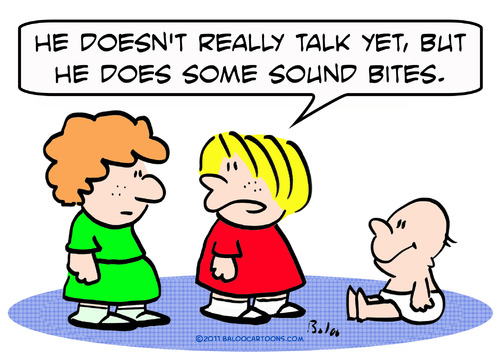
My concern is even wider. "Sound bites" typically range from 5 to 15 seconds long. They are designed to distill complex information into a short, memorable, and easily quotable phrase. They often contain around 10 to 30 words. We apparently are not able to concentrate & take in longer complex information.

https://www.doolecommunications.com/wp-content/uploads/2018/04/baby_talk_sound_bites_1129665.jpg 

So presumably we have been in the process of radically changing our brains - Our Neural pathways. Modern life & technology has changed our brains. Neuroplasticity is the brain's ability to constantly reorganize and form new neural connections. Our environments, digital habits, and reliance on technology have measurably altered how we focus, remember, and process information. How often I have seen mothers glued to their phones & not talking to their babies or toddlers?

I'm not at all sure that I am happy with that. Thank god my brain is quite old & resistant to change. Although I'm quite technically competent, I'm definitely not scrolling on my phone all day. I'm not a slave to algorithms thinking for me. I don't go down the "black holes" or "rabbit warrens". I am capable of focussing.   


Friday, 15 May 2026

Instant Gratification

Over my lifetime the world has moved on in ways I could not have imagined. I expect my parents generation felt exactly the same. It's a mixed picture, some things are much better, technology for example. Some have stayed the same like the disconnect between the rich & the poor. Some are worse I think, homelessness, the employment situation for the young & the NHS spring to mind.

One huge difference I see is the unrealistic expectation that our desires will be met instantly as a right. I think my post war generation was more stoic, self reliant & accepting. I think the majority of people did just get on with life. I don't think we had high expectations of what would be provided for us by the state. Support from the family, yes. From friends & neighbours too. But not handed to us by an overarching state. 

If that is what you want then someone has to pay - the only way, apart from credit card debt, is from taxes. So the tax system has to be fair & equitable. Data suggests the lowest income households may pay a disproportionately high percentage of their income in total taxes—including VAT and council tax—due to the regressive nature of consumption taxes. The tax system often treats unearned income (capital gains, dividends) more favorably than income from employment, which is seen as unfair to people who rely on wages rather than accumulated or inherited wealth. Although high for the UK, tax-to-GDP ratios remain below the average for many other advanced Western European economies.

Undoubtedly the ridiculously complex UK tax system needs complete overhaul & simplification. "Patriotic Millionairs" research shows that 9 in 10 UK millionaires are proud to live in Britain and three-quarters would be willing to pay more tax to ensure public assets get the funding they need. Great!

But the rest of us also need to understand that we need to let go of the idea that the State will provide. That we can have all the trappings of modern life - mobile phones, computers, huge TV's, disposable fashion, the latest kitchens & bathrooms...on demand. We need to go back to the idea of funding our own lifestyle according to our means. Yes we need to give help to the poor, the ill & the disposessed. But we need to accept that a welfare state cannot & should not fund huge, unrealistic sums of money.

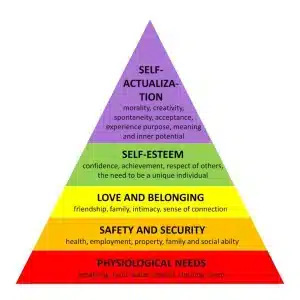
There needs to be a contract between all of us, that as far as possible we will not expect instant gratification, state sponsored, funding. The state should be a safety net for people in real need. Things have got out of hand. We need to accept that some things take time to achieve & that is no bad thing. We need the basics. Everything over & above that is a bonus not a right.

 https://brooksandkirk.co.uk/wp-content/uploads/2024/01/maslow-needs3-1024x1024-1-300x300.webp 

We all need to see tax as a duty not something to be evaded at all costs. We all need to really believe in fair distribution of wealth.  


Wednesday, 13 May 2026

Icons

There have been a few people that I have hugely admired in my lifetime. Two obvious ones, Nelson Mandela of South Africa & David Attenborough of the UK. Both are men who have had vision & determination to effect change for the better in different spheres. Both have literally given their lives to their goals. Without ever meeting them, both seem to be truly remarkable & genuine people who care for others & the world around them. Both worked selflessly & tirelessly for the causes they espoused.

There are sporting icons, great actors, leaders, musicians, dancers. People who have worked exceptionally hard to achieve in their chosen field. It takes effort, dedication & sometimes privation. I admire many, but the ones I admire most are the ones who are prepared to speak out against injustice & wrong. Often that takes great bravery.

We are at a stage in the history & development of our world when we need more people who are prepared to do this. People who don't set out to be icons. They just follow a path of truth & justice wherever it leads.

We have a plethora of paper tigers, influencers, politicians, pedlers of lies & conspiracy theories. Their voices are heard, but they are not acting in our interests or the interests of the planet we live in. 

 https://www.brainyquote.com/photos_tr/en/n/normanreedus/491646/normanreedus1-2x.jpg

Then there are those who remain silent when they should speak out. If you see a wrong & do not act what sort of human being are you? Taking the easy way is not taking the right way. We may not all have the charisma to be an icon, but we can all openly support truth & justice. We can all influence the thinking of others by providing reputable sources & evidence to oppose lies & conspiracy theories. We can all stand up to bullies & loud voices trying to override the majority of decent people. 

We cannot expect someone else to do this for us. We cannot expect the problems of the world to be sorted out by someone else. Every voice & every action supporting fairness & right is important.


Saturday, 9 May 2026

Tradition & Politics

I am not convinced that being tied to tradition is such a good thing. Theoretically traditions help create cultural identity, social cohesion & continuity. Really? There are British traditions which seem anachronistic to me, like Black Rod banging on the doors of an adversarial English parliament summoning MP's for the King's speech for example. Does that happen in Scotland or Wales? No wonder they want independence. I also seriously question the singing of Rule Britannia, Land of Hope & Glory & Jerusalem at the last night of the proms. To me they are outdated celebrations of colonialism in a multi ethnic & cultural society.

History is important if we learn the lessons that it teaches. But so much of what we should have learnt we haven't & we just repeat the same mistakes in a never ending "groundhog day", where tedious, monotonous or repetetive situations happen over & over. We are still a hierarchical, male dominated, class ridden, society according to the 2023 Great British Class Survey. 

https://revisesociology.com/2023/04/07/the-great-british-class-survey/

  • Elite (6% of the population): the most privileged class in Great Britain who have high levels of all three capitals which sets them apart from all other classes. Typical jobs include lawyers, doctors and higher-level managers. Much of their wealth is in property (they are typically home owners), and their income and wealth are double that of the next class down. Also one of the oldest classes in terms of age with an average age of 57.
  • Established Middle Class (25% of the population): members of this class have high levels of all three capitals although not as high as the Elite. They are a gregarious and culturally engaged class. Average age of 46.
  • Technical Middle Class (6%): a new class with high economic capital but seem less culturally engaged. They have relatively few social contacts and so are less socially engaged. Average age of 52.
  • New Affluent Workers (14%): this class has medium levels of economic capital and higher levels of cultural and social capital. They are a young and active group with an average aged of 44.
  • Emergent Service Workers (15%): a new class which has low economic capital but has high levels of ‘emerging’ cultural capital and high social capital. This group are the youngest class with an average age of 32 and are often found in urban areas.
  • Traditional Working Class (19%): this class scores low on all forms of the three capitals although they are not the poorest group. The oldest class with an average age of 66.
  • Precariat (15%): the most deprived class of all with low levels of economic, cultural and social capital. These are the most likely to rent and will typically be in unskilled temporary jobs, with an average age of 50.
  •   https://i0.wp.com/revisesociology.com/wp-content/uploads/2016/08/new-british-class-survey.png?resize=457%2C330&ssl=1

    The Precariat is new to me. How sad that we have had to create a new even lower class. 
     
    Yesterdays election results just indicate to me how unhappy the British electorate is with the status quo. Populism or a different way forward seems to be what people want. I do think we need to really look at ourselves & compare what & who we are with Europe, Scandinavia & the rest of the world. We need to find a way to retain some good traditions & finally get rid of the ones that prevent us becoming more in tune with the challenges of todays scientific & technical world. 
     
    If we don't I fear we will go the way of the Dinosaurs, because we will no longer be "fit for purpose" in todays fast moving world. 


    Tuesday, 5 May 2026

    Little Pleasures

    Ageing means changing, adapting & accepting. Both mind & body change, which affects what you can & can't do. There are two ways of dealing with this, you can accept & modify, or you can refuse & fight it. Accepting & modifying does not mean giving in & becoming isolated, insular & self absorbed. It means knowing the things you cannot change or do and finding "work arounds". It is important not to just lay down & give in, but you do need determination to continue to live a good life, whatever the challenges. 

    Several previous pleasures are no longer open to me because of pain, stiffness, fatigue & breathlessness. Hill walking is a long lost pleasure. Pacing is important because stamina is non existant. Gardening & housework are difficult & some things are even impossible. Showering & dressing is a challenge, either my arms are shorter or my legs are longer & I can't reach my feet! Sitting for extended periods in the theatre or cinema is painful. Cooking from scratch is painful & exhausting. Visiting art exhibitions is difficult & tiring. Walking for more than 5 minutes is a challenge. Walking & talking even more so....I could go on, but how boring would that be?

    I do think that you have to accept some of the challenges of ageing. I also think that mindset is really important. If you only see the negative you become someone who is not a pleasure to be with. You become a "drain". Self absorbtion is not a pleasant characteristic. Always focussing on your conditions or the aspects of your life you don't like will not endear you to those around you.

    So, providing you don't have a terminal condition, (although we all do in a way), or you aren't suffering from a really serious illness, I think you have to be aware & outward looking. You have to find the things that give you pleasure. Little pleasures like enjoying good food & not eating rubbish. Finding a way of keeping fit you enjoy, (I love swimming). Keeping interested in what is going on with family & friends & the world. (You are not the centre of the Universe). Listening to the radio, (I love Radio 4).  Volunteering & helping others, (beneficial because you are actually meeting people). Doing things to keep your mind active & distracting you from the day to day difficulties of life - Puzzles, reading, games like solitaire & mahjong on an Ipad or phone....

    I think I am saying look honestly at your thoughts & personality. Would you want to spend time with yourself? Yes, if you live alone I know you do most of the time. But would you enjoy a conversation with yourself? Are you interested in other people, new things, events in the world, life itself? Or are you trapped in a mindset that has unrealistic expectations of others & is negative about everything & everyone?

    Actually, I don't think this is just about ageing. It's about just being a nice human being & really valuing how lucky you are in small ways. Accentuate the positive, a song from 1945, the year I was born. 

    https://www.youtube.com/watch?v=f3jdbFOidds&t=60s 

    https://quotefancy.com/media/wallpaper/3840x2160/1450313-Ann-M-Martin-Quote-You-got-to-accentuate-the-positive-eliminate.jpg 

    Saturday, 2 May 2026

    Women & Religion

    I went to college in Cockfosters North London. It was close to Barnet & Finchley, a Jewish area, & I used to baby sit for Jewish families to earn money to see me through college. 

    Orthodox Jewish religious law says that women should cover their hair when in the presence of men other than their husband or close family members. This can be a scarf, hat or wig. Not all Jews are orthodox. 10 - 15% are, with most in Israel. But the population is growing faster because of high birth rates - projections suggest 1 in 5 by 2040. Israels orthodox Jews, particularly the ultra orthodox Haredim, are growing rapidly & follow strict interpretations of Jewish law (Halakha), often living in segregated communities, wearing distinctive, traditional clothing, and focusing heavily on religious study. Women are not confined but they are expected to dress and behave modestly in public. When I was in Israel & the West Bank it was easy to see who were the orthodox Jews. They are very distinctive.

    Muslim women are instructed to dress modestly, covering their entire body except for the face & hands, to honor principles of piety and privacy. This usually involves wearing loose-fitting clothing that does not reveal the body's shape and a headcovering (hijab), though interpretations vary regarding the strictness of covering. I have travelled in the Middle East extensively & always felt very uncomfortable seeing the women covered from head to toe in black flowing robes, often made of polyester. I adopted the covering rule, but wearing lightweight cotton & was still uncomfortably hot. In Yemen I was spat at & harrangued because my headscarf had slipped showing a little hair. But that was fairly isolated, most Middle Eastern countires were really hospitable.

    Christians are not as focussed on modesty in women, but Amish, Mennonites, and some Catholic or Orthodox traditions encourage modest dress (e.g., covering shoulders, long skirts, head coverings). Historically, women wore chapels veils or head coverings

    Hinduism & Sikism also emphasise modesty in women, hijab in Hindu traditions & humility with garments like the ghunghat or chunni often covering the head. 

    Ostensibly many faiths use head coverings to symbolize humility and submission to God or higher spiritual authority. Additionally supposedly covering curbs the male gaze & disrupts objectification signalling the woman is not available.

    I have a real difficulty in accepting that this fairly universal religious treatment of women is anything other than a form of patriarchal control and a means to blame women for male behavior. Some interpretations suggest the historical, cultural roots was to mark women as "respectable" (owned by a man) versus "unrespectable" (uncovered). 

    There is argument as to whether the bible or the quran actually unambiguously requires women to cover their hair & bodies. The interpretation of the texts has been done by men. Men have dominated religion for milennia. I remember being in the cathedral of Santiago de Compostela after travelling the Way of St James. The only woman among a lot of clergy, in embroidered robes, officiating at the service, was a nun, in a plain grey habit, who led the singing. 

    Some religions have become more female friendly, but there is still has a long way to go. Mary Magdalene was a prominent disciple of Jesus & was told by him to announce his resurrection according to the bible. But she has largely been dismissed as a prostitute rather than a model for redemption. 

    Until religion really treats women in the same way as men & gives them equal standing, freedom & power in all ways I will continue to feel that, at it's roots, religion is misogynistic.

    This may contain: a group of people laying on top of each other with the caption saying, why do they say amen at the end of a prayer instead of women?