Search This Blog

Monday, 30 March 2026

Having a Voice

Being a teacher means that I used my voice a lot & also was often exposed to childrens infections. Every time I got a cold it turned into something worse, laryngitis, strep throat, bronchitis, pneumonia & pleurisy. Even now I'm retired I don't seem to be able to just get a cold & I often lose my voice. As I live alone & don't talk to myself much - yet, it isn't a huge problem. 

But communicating & speaking is an important part of our lives. Our relationships & our work lives depend on it. Today we can communicate through other means, text & email for example. But they are open to misinterpretation in a way that speech isn't, because there are context clues with speech - tone of voice, facial expression & body language for example.

However that isn't really what I'm thinking of in this post. I'm thinking of the voice that we each have to influence other people & big decision making. I think that we forget that our individual opinion can be really important in the areas of politics & philosophy. If we speak out individually in social contexts we may or may not influence what others think. But if we disagree with a point of view I feel that it is important to be able to express it. Unfortunately it is often the case that we don't speak out for fear of offending or upsetting others. Or we just aren't confident or brave enough. But letting an unacceptable point of view pass is colluding with the speaker. It's actually cowardly.

People have fought for the rights of free speech. People have fought for the right to vote. People have fought for the right to be part of a collective like a union or professional organisation. One voice in the wilderness may not have much of an impact. But protests & marches can be powerful demonstrations of a groundswell of opinion that should not be underestimated. That is how change for the better happens. Think of Votes for Women, LGBT rights, Grenfell & safer Homes, the Right to Roam, Apartheid, Fracking....

Our right to protest, which is central to a healthy, functioning democracy, is under threat. The police have huge powers to restrict protests and arrest demonstrators under the Crime and Policing Bill.

https://www.libertyhumanrights.org.uk/issue/eight-repeat-protests-that-achieved-change/

Having a voice & using it is very important. Use it or lose it. Losing your voice means far more than being dumbstruck. It means losing your power to affect change for the better.

https://i.pinimg.com/1200x/a4/44/ea/a444ea4bf27c4427a5014bff2f086550.jpg 

Friday, 27 March 2026

Civil War?

Yesterday I went to a discussion about the possibility of Civil War between Profs David Betz & Jonathan Portes as part of the Oxford Literary Festival. I found the former cogent & compelling & the latter surprisingly poor & arrogant.

I remember clearly the discontent & violence of the 60's - 80's. 

I think the 60's was the start of  profound social, economic, and political tensions that signalled a breakdown in traditional social norms and trust in authority. There was industrial unrest & economic weakness, declining trust in government, race & immigration tension, class divide & social inequality among others. Does that ring any bells?

The 70's brought all of that plus inflation near 30%. Resulting in the "winter of discontent" in 1978 / 79 with widespread strikes, a 3 day working week, rubbish not being collected & energy shortages - The lights literally went out. 

The 80's heralded huge economic & political divisions & Thatchers conservative government, with a decline of traditional manufacturing, mass unemployment, industrial conflict, and severe urban unrest. Not to mention privatization selling off so much of our infrastructure & services. The miners strike of 1984 / 5 was a bitter industrial dispute handled very confrontationally by the government & the police. That was so bad that there is finally going to be an official inquiry into the violent policing at Orgreave. Then there was the Poll Tax riots & the inner city riots in Brixton, Toxteth, Handsworth, (which I knew well) & Moss Side.

So, no one can tell me that civil war can't happen here. All of that laid the foundations for the society we live in today. But all of the metrics have got worse.

CDN media 

But there are significant differences that also make the situation worse.  I will just make 2 points. 

There is universal distrust of politicians & politics in general, with good reason. It is arguable that we do not have a functioning democracy & the complexity of governing has increased exponentially, requiring a cadre of very experienced & skilled leaders that are markedly absent. The 3 party system is past it's sell by date.

We live in a age of rapid communication. We all have powerful computers literally in our hands. We have instantaneous access to both reliable & unreliable information. It is difficult to differentiate between truth, lies & conspiracy theory. Equally it is easy to whip up discontent & anger & organise protests which can easily turn violent. 

I really hope that the curtailment of the right to protest & aggressive policing epitomised by "kettling" is not used to address the discontent evident between the "have's" & the "have not's". But I fear that we are in danger of ignoring the indicators that things are seriously unacceptable to so many people. I can envisage rioting & civil war because I have seen the foundations laid.

That is, of course, if we don't find ourselves in a 3rd world war. 

Tuesday, 24 March 2026

Keeping Calm & Carrying On?

The balance between keeping well informed on world events & seriously worrying about the consequences of the self serving behaviour of some countries leaders is difficult. Personally I think that Trump, Netenyahu & Putin should be indicted & hopefully found guilty & imprisoned. I know that I am judging before hearing all the evidence & argument. But I look at verified sources &  having been a Magistrate for many years, I feel that the evidence is overwhelming. Beyond reasonable doubt. 

The people of the world are facing real harm caused by these men. Everything from death & injury, to loss of their homes & infrastructure, & at the other end of the scale a huge increase in the cost of living. Millions of people are adversely affected worldwide. We in the UK are fortunate, we aren't in the firing line, we just have to face increased costs & shortage of supply.

But it may not end there. I have listened to several respected sources, senior military people, politicians & commentators & the possible outcomes are truly dire. At one end of the scale the civil war risk in the UK is rising due to heightened social tension, economic strain, and polarization, with some experts projecting a potential 18.5% chance over five years. 40-53% of people in Western nations view world war as likely in the next 5-10 years. Former NATO deputy commander Richard Shirreff has warned that the current U.S. - Israel conflict with Iran could be the "final catalyst" for a third world war. We are thought to be in a second cold war fought through regional conflicts, proxies, and cyber attacks.ilitary analysts and historians warn that the international order is under "considerable strain". 

It is a bleak picture. We live in a very unstable & unpredictable world that has some power & wealth hungry men in charge. 

So what can individuals do? We are not without power. We need proactive, sustained action by individuals to reduce political polarization, mitigate inequality, and foster communication across divides. We need an intelligent & rational response by the masses to counter the actions of the few who have no regard for human rights or fairness. We need to stand up to bullies & challenge extremism in all it's forms. We need to be very selective about our use of media in all it's forms. 

Most of all we need to use our "democracy" & use our vote to elect principled leaders & hold them accountable. We need to ensure good civic education of our young people & support fairer electoral reform. We need to be empathetic towards the disposessed & treat others with respect, regardless of their nationality, race, or religion. We need to reduce economic inequality.

We, the population need to organise & use our power to ensure that the "bad actors" do not escape. We need to keep calm & carry on. ( 1939 catchphrase) 

https://www.publicdomainpictures.net/pictures/50000/velka/keep-calm-and-carry-on-1368463748qW4.jpg 

Or we will deserve everything that we get & it will not be pleasant.  

Friday, 20 March 2026

Fiscal Debt & Quantitative easing.

Fiscal debt (FD) and quantitative easing (QE) are
closely linked through a central bank's purchase of government bonds (gilts), which effectively swaps long-term, fixed-rate government debt for short-term, variable-rate central bank reservesHigh debt-to-GDP ratios are projected to hit 105% in developed markets by the end of 2026.

The UK has run a national debt for most of the last 300 years to fund wars, beginning in the 1690s. Debt has reached peaks above 200% of GDP after major wars.  It reached roughly 250% of GDP in 1946–47 following World War II. Debt-to-GDP fell steadily from the 1950s, reaching a low of 24% in 1991–92.

The Bank of England was founded specifically to manage a £1.2 million loan to the government.brief periods of budget surpluses—years where it earned more than it spent, under both Thatcher's & Blair's governments. We used to have significant gold reserves. Not now. More than half was sold off at historically low prices between 1999 & 2002. Personally that seems to me a major financial mistake.

I wouldn't run my personal life on the basis of FD & QE, so am at a loss to understand the massive debt we have got ourselves in. So who pays the price of all this - taxpayers, users of services & future generations. In other words you & me & our children & grandchildren. A significant portion of the debt is owned by UK pension funds, insurance companies, and banks, meaning the state owes the debt to people in the UK. Outcomes include rising costs & inflation.

Is the UK bankrupt? Well some say yes & some say no. Some commentators highlight the risk of a "sovereign debt crisis" or "running out of money. Others argue a sovereign nation issuing its own currency cannot go bankrupt. Personally I can only relate all of this to my situation & it doesn't stack up. Politicians & financiers deliberately use euphemisms & obscure language to confuse & obfusticate. If they told us the truth in plain English I might believe they knew what they were doing. So I'm deeply cynical.

https://scontent.fltn3-2.fna.fbcdn.net/v/t1.6435-9/119742513_2399525193505760_4180321946997632943_n.jpg?stp=dst-jpg_s640x640_tt6&_nc_cat=107&ccb=1-7&_nc_sid=7b2446&_nc_ohc=DoJrwS_J_mUQ7kNvwHmBnI_&_nc_oc=AdqJTDls7oHFOGEIyesf8Kk4L_fgKgqeFo2XY31ETqpr6z_DLrtzPD1__STEeqv3N9c&_nc_zt=23&_nc_ht=scontent.fltn3-2.fna&_nc_gid=JSDqajYqs0fbbshJejqUyw&_nc_ss=7a30f&oh=00_AfxMkTWhGhXu0umBFXSyuQt3t3xmIyezMj-EgK_LYzMPEg&oe=69E4A655 

If we can only keep going by borrowing more are we bankrupt?  I won't be paying the price, but my Grandchildren will. So will yours.  

Tuesday, 17 March 2026

Questions & Answers

I had a cold phone call about my energy. Within seconds I registered that it was a cold call & told the woman I wasn't interested & hung up. My brain filtered, reacted & made me speak appropriately in a few seconds. That is amazing computing power. Especially as my brain has been around for decades, so it's surprising it's still working.

The human brain reaction time averages 0.25 secs for visual stimuli,0.17 secs for audio, and 0.15 secs for touch. The total time to perceive, process, and respond to a stimulus, typically ranging from 0.1 - 0.3 secs. Age, fatigue, exercise, and stimulus complexity influence speed.

https://blogger.googleusercontent.com/img/b/R29vZ2xl/AVvXsEguge29R4o0YHEAUS9v6b18ewt89QpVfX6j6xDteqSpHHlClp0_XGAZ7mKuBDhUIJCnjA_-003o1IyT4xB17xoYEuSn1HcNd7ZZbJxTkHJNO06LxouAPooPrYTVNBLBUmkJiHsnuTn7DL0cyf8m_FdGSWx4r1TG_VlzYXytRehjNa25HkGQ5Ia7crdDJdI/s16000-rw/Brain%20Lobes%20and%20Their%20Functions%20Explained%20with%20Diagram.jpg
 
Given how lucky we are to have powerful brains it is amazing how prone we are to making mistakes. We are fallible. All sorts of factors come into play. 
A combination of psychological, social, and situational factors shape how choices are evaluated. Key factors include cognitive biases, emotional state, risk propensity, personal values, social pressures, time constraints, and the availability of information
 
Each day we make decisions, even down to what socks to put on. Each day we have complex conversations, social, at work, in a shop, on a phone...Our brain is always working. If someone asks me a question I don't know the answer to, I can usually find out the answer. I just have to check that I am using a verifiable source, there is so much misinformation out there. So many unreliable outpourings of information without evidence from spurious sources.
 
It is worth taking the time to think about important questions - "knee jerk" reactions are not usually the best. I would always try to go for due consideration over speed. Speed without consideration doesn't usually result in reliable choices & decisions.
 
I think that is becoming a real problem for politicians & people making decisions that affect all of us. We aren't prepared to give them time to formulate answers to very complex problems. We are also very intolerant of mistakes. We don't like it if they change their minds. They in turn are becoming more and more wary of answering direct questions & committing themselves to a course of action or an opinion.
 
Truth is important, but it becoming increasingly difficult to find. However, you have been given a brain & access to reliable, evidence based, information, so use it. Don't just follow the herd or the charismatic leader or influencer who shouts loudest. 
 

Saturday, 14 March 2026

Trauma & Pain

At some point in our lives we will all experience trauma & pain - Both physical & emotional. Some more than others. I once had to write down all the trauma I have experienced in 81 years It covered both sides of a sheet of A4 - typed! Weirdly I had to keep going back to it & adding things I had missed. Some were surprisingly important, but I hadn't initially remembered them. I later wondered if my brain had put them in a box & hidden them away.

We are shaped by experience. At some point we learn that bad things happen. Initially we may well feel that we cannot cope & be utterly devastated. But eventually the "penny drops" & we understand that trauma can't be avoided, so we have to learn to deal with it. It helps if we are supported by friends & family, but ultimately we have to find the resources within ourselves.

There are millions of people in our world who are dealing with trauma far worse than anything I have faced. People without the basic necessities of life, people living under dreadful repressive regimes, people living with war.....In our relatively safe & comfortable lives sometimes we cannot find it within ourselves to sympathise & empathise enough to not only say we support them, but more importantly take action to aid. 

I watched a Ken Loach film from 2023 - "The Old Oak". I was very moved. It's about a group of Syrian refugees sent to an old mining community in County Durham. The community was devastated by the miners strike & is poor. They didn't know the refugees were coming & were initially hostile & in some cases racist. Both communities were traumatised by life. But gradually the things that were common to both & their innate humanity brought them together. Although it is a sad film, it is very uplifting & has a message we should all hear.

The things we all have in common, whatever our religion or culture, are bigger than the things that divide us. Sadly sometimes we don't seem to be able to see that. We cause eachother trauma & pain because we only see difference. We think our way of doing things & thinking is the only right way. We are deluded. We can be extremely narrow minded & extreme in our views. 

I have reached the point in life where I abhor extremists of any religion or nationality. I see no difference between extreme right wing or left wing politics. I see no difference between extreme Islam & extreme Christianity. We all need to find a middle way rooted in our common humanity. If that means we need to be more tolerant, more willing to share, more willing to distribute wealth & resources more fairly, I'm willing to do that. Farirness is not just an important concept, we need to put it into practice.

https://littleyellowstarteaches.com/wp-content/uploads/2025/05/11-humanity-quotes-for-kids-100-1024x1024.png 

 Are you? Because if you are not the current instability will only get worse. 

Wednesday, 11 March 2026

A Difference of Opinion, Mediation & Negotiation

I have always had friends who have had different political opinions to me. Although I have lost friends for various reasons over the years, I don't think I have ever lost a friend because of political differences. It is more likely to have been because of a misunderstanding, or because of something said or done which was unacceptable at the time. Some have just drifted away or moved away. Relationships & people change. 

I think it is important to be able to discuss personal feelings & opinions. Having strong opinions is not a bad thing. "Standing your ground" & "fighting your corner" verbally should be acceptable. What is not acceptable is verbal or physical abuse. Even losing your temper can be a sign of immaturity & weakness. Aggressive shouting means you have "lost the plot". 

I think this holds on a micro & a macro level. In personal & international relationships.

After getting medical retirement in my mid forties I was lucky enough to have several really interesting & challenging volunteer jobs over the next 40 odd years. One was being a mediator for a charity called "Resolve". The training programme was based on the Quaker method & was very good. We mostly dealt with neighbour disputes. I was often surprised how intransigent people could be. I have actually experienced that myself with neighbours. One in particular was actually really intimidating. As mediators we always tried to mediate "face to face". But it wasn't unusual for people to refuse to talk directly to the people they were in dispute with. It depends on the individuals & the conflict. Separate, shuttle meetings are sometimes necessary. 

I watched " The Zero Line" BBC documentary this week. https://www.bbc.co.uk/programmes/m002rxvc

War is always shocking. But this was another level. It showed the lengths Putin & his generals & politicians are prepared to go to in order to fight his illegal war in Ukraine. The senseless brutality of the killing of his own soldiers who do not want to fight is horrific. 

Wars always end in negotiation. No one wins a war. My point is that simply going to war is failure. Failure of listening. Failure of understanding. Failure of seeing someone else's point of view. We are adversarial. The UK justice system & politics are both adversarial. If we want to avoid conflict & war we have to change our attitudes. Everyone has to be prepared to be more inquisitorial. Where there are disputes people need to treat eachother with respect & listen to alternative points of view.


The 8th of March was International Womens Day. Before Maggie Thatcher in 1982 & Indira Ghandi in 1971 there hadn't been a woman who started a war since Empress Matilda in the 12th century. Women, by an large, are less aggressive than men. They tend to be caring & concilliatory. 

Until we learn to resolve conflict, respect difference, & mediate or negotiate out of situations, wars will continue. People will die & be mentally & physically injured. Buildings & infrastructure will be demolished. 

It's all such a waste. 


Sunday, 8 March 2026

Losing my Mind

I once started to write a novel set in a school, (for obvious reasons). It came to nothing. But I remember the opening line - "Here I sit, losing my mind & minding my loss". While I loved teaching, being the head of a very large primary school, 450 children, was stressful. I didn't lose my mind though.

Now, although I don't feel I am losing my mind, I do feel less confident in my memory. I, who was really well organised, who felt on top of a professional job, running a family & home, plus organising holidays & a social life. 

Ageing does that to you. Bits of you wear out. I sometimes think about the amount of data stored in my brain over a period of 81 years. No wonder retrieval is tricky. Then there is the small miracle of a heart beating consistently for all that time - Aided now by a pacemaker & a daily handful of drugs. Not to mention all the other organs in a body. It is a miracle & we shouldn't take it for granted. Especially as life expectancy in the UK has increased by 10 -15 years since I was born.

But we do. We think living is our right. We think we are individually important. We think we will all live to old age. But we are grains of sand on an infinite beach. We are part of a whole, but of little consequence individually. We can all contribute something to the community or society we live in. We are all special in some way, we all have something we are good at. We just need to use what we have been given.

Knowledge is gained cumulatively through endevour & experience. There has to be effort & openness to learn. We are born with huge brain capacity. The popular idea that humans only use 10% of their brain is a myth; we actually use 100% of our brains. Brain imaging technology, such as fMRI and PET scans, show that almost every part of the brain is active over a 24-hour period, even while sleeping. 

 https://www.azquotes.com/picture-quotes/quote-neuroscience-is-by-far-the-most-exciting-branch-of-science-because-the-brain-is-the-stanley-b-prusiner-122-19-72.jpg

Age related memory loss is frustrating. But forgetting what you were going to do, someone's name, an appointment, where something is, none of that is as serious as dementia. It is normal. I'm not losing my mind, I'm just misplacing the data temporarily, it usually comes back. If I'm doing a general knowledge crossword I can usually see an image of the answer, but not remember the word. I have a very visual memory. 

It's a case of "use it or lose it". Exercise increases the blood flow to the brain, socialising keeps the mind sharp, doing puzzles, reading & learning new skills & a good diet - all are important for the brain. If you don't want to lose your mind you have to actively stimulate it.

But you also have to give your brain a rest. So I do wonder whether our addiction to the constant stimulation of mobile phones & computers is a good thing. I was on a bus yesterday. Two pram pushing mothers got on. They spent the whole journey scrolling on their phones, not looking at their children. Only one mother spoke to her child - to say "no". Around 37% of children joining Reception in 2025 in the UK were not considered "school ready," an increase from 33% in 2024. I'm not surprised. 


Thursday, 5 March 2026

Bombarded

Occasionally I feel bombarded, usually by my "to do" list, which never seems to get shorter. Sometimes I feel bombarded by emails, but I delete a lot of them. When I am researching for a blog post there are times when I feel bombarded with information & have to spend a lot of time sifting the "wheat from the chaff". There is a lot of chaff!

But I am not being bombarded by bombs & missiles. It is beyond my capacity to imagine what that feels like. The thought of the harm done to children mentally & physically makes me feel sick. To be in a perpetual state of fear, knowing that each minute might be your last is beyond comprehension. 

The sheer number of drone attacks & missiles that aggressors are able to fire is frightening. Russia launched 288 missiles at Ukraine in February 2026, the highest monthly total since the beginning of 2023. In addition to the missiles, Russia deployed 5,059 long-range drones against Ukraine. As of May 2025, Israel had dropped approximately 100,000 tons of explosives on the Gaza Strip since the start of its military campaign on October 2023. The amount of explosives dropped on Gaza now far exceeds the combined bomb tonnage dropped on Dresden, Hamburg, and London during World War II.

Yet governments do not publish accurate, comprehensive, information about the costs of war. They do not say how many soldiers, non combatants, children are killed or injured. They do not publish the financial cost of the armaments & machinery of war, which must be astronomical. They do not publish the cost of clearing the devastation caused by the bombardment, or the cost of rebuilding the infrastructure & property. Long-term expenses like veteran care, interest on debt, or indirect economic losses are omitted, frequently hiding true costs from the public.

The Stockholm International Peace Research Institute tracks official budgets whose total expenditures often far exceed published figures.

https://quotefancy.com/media/wallpaper/3840x2160/2810013-Frederic-C-Howe-Quote-War-demands-sacrifice-of-the-people-It-gives-only-suffering-in.jpg

We have a democracy of sorts, it's better than none. We vote politicians in to make informed decisions on our behalf. (I use the term loosely, because I don't see a lot of evidence that is true). But we don't require them to give us enough information after the decisions have been made as to whether they were justifiable & right. We certainly don''t require them to give a full report on all the costs of taking us to war.

I'm not saying that war is wrong or unecessary per se. I do question how the vast amouts of money any war costs are found, when our infrastructure & systems have been failing for years through lack of funding. There are only a few ways the money is found, borrowing, quantitative easing, selling public assets or privatizing state-owned enterprises, (but we've already done that) & lotteries. 

Perhaps if the true costs of war had to be published, politicians would think twice. Especially if they had to face the consequences of their choices. Unfortunately they don't.


Monday, 2 March 2026

War & Peace

Over 130 armed conflicts are raging today, twice as many as 15 years ago. The highest profile ones are Israel v Gaza & the West Bank - over 72,000–75,000+ Palestinians have been reported killed, with thousands more missing under rubble - Russia v Ukraine - estimated fatalities have surpassed 1.5 million to 2 million  - Israel & USA v Iran - it's too early to calculate fatalities. Sudan & Mayanmar have also resulted in tens of thousands of fatalities.

https://scontent.flhr10-1.fna.fbcdn.net/v/t39.30808-6/606036120_1611527896504885_3866596805599865476_n.jpg?stp=dst-jpg_s640x640_tt6&_nc_cat=105&ccb=1-7&_nc_sid=7b2446&_nc_ohc=T-RM0UMXyq8Q7kNvwHf0-ul&_nc_oc=AdkKBcDVHcAJ5pXlfM3EK0t7kIiXElQPQx8df_pUSvF7XAfnBvCq0To7ksi4LHdcHk4&_nc_zt=23&_nc_ht=scontent.flhr10-1.fna&_nc_gid=FFUDnoND9BY8SB_93Sdo9A&_nc_ss=8&oh=00_AfyxA_iZfdLRhw59si9nTZgyezM4sLNrRutNSyA0jaLk6A&oe=69B0889F

https://warwatch.ch/explore/

https://www.statista.com/topics/13125/conflicts-worldwide-2025/?srsltid=AfmBOoqGENJY6txRcS5H7dfrEmQb-h81JfRE0O_TMpPwNx5gxmjh0E2z#topFacts 

"Lord of the Flies" by William Golding shows how close to the surface agression is in the male psyche. The current BBC drama is timely if it makes us think & try to stop this. Given the right circumstances we all have the potential to become feral. But fortunately some can resist.

War is catastrophic in every sense. It is a waste of human life & potential. A waste of resources. A waste of money. A waste of time. War causes displacement & huge population migrations. Non combatants flee, who can blame them? There is nothing good about war apart from the profits it generates for the arms industry & for the companies who go in after to reconstruct the devastated systems & cities. There is money in war. A lot of money. It is highly lucrative for a select group, specifically defense contractors, arms manufacturers, and certain private entities within the military-industrial complex. Profits are driven by government demand, not market forces, with companies often benefiting regardless of the conflict's outcome.causing immense debt, destruction, and long-term economic damage. 

Why do we go to war when all the evidence is that it doesn't work & simply causes death, injury & devastation? Countries go to war to defend themselves, to increase their territory, power & security, resources & wealth, sometimes because of religion or to change the demographics of their country. Basically people fight when disagreements cannot be resolved peacefully. 

War is abject failure - Failure to negotiate & solve problems. If only the people who make the decisions could see that. War is not heroic, although some people do heroic things. I fail to see how the sort of death, injury & destruction we are seeing today can be anything other than failure. How have we reached a point where we can justify this modern warfare of drones & missiles, largely fought by people with computers at a distance? If you don't actually see the person you are killing & feel the impact of taking a human life face to face do you really take responsibility or feel the pain of what you have done? 

We have distanced ourselves from reality. We watch on a screen, on our TV's, computers & mobiles, like a computer game. We can switch it of at will. We do not have to face up to it. The people in charge certainly don't.  


Friday, 27 February 2026

Seeing the Whole Picture

To some extent we all have "tunnel vision". Not as in eyesight, but as in being completely absorbed in ourselves, those closest to us, or achieving a particular aim and not noticing or considering the different aspects or effects of what we are doing. Depending on the circumstances, it can be a good or bad trait.

Now I am old, when I walk I look down at the pavement because I have had several bad falls. I want to ensure that I don't trip up. The result of that is that I don't see what is around me & I have become stooped. Literally tunnel vision.

When I think back over the decades I can see that there have been micro & macro decisions that I have made, or other people have made for me, that have had unforseen consequences. In order to see the whole picture, you have to take into account what has gone before & also speculate on the possible outcomes of what you propose to do or not do. Once you have identified all available information you have to select the best way of going forward. It isn't always easy. You need evidence & possibly advice from other sources.

That is true for me in my life & also in the grander scheme of things - the bigger picture of the world I live in. But we humans are very bad at doing this. We make choices that are expedient at the time. We make choices in our own self interest & try to avoid choices that might adversely affect us. We are often driven by fear & ambition. We are more comfortable with the status quo & we don't like change. We don't want to move out of our "comfort zone". 

Individually this is sometimes difficult to deal with. A small individual mistake can have big consequences on events or people. Politically, internationally & at a country level, making the right decisions is seriously important. Hindsight is wonderful, but "pointing the finger" really doesn't get anyone anywhere. History teaches, but we are often blind to the lessons. Everyday seems to be "groundhog day" & everyone seems to "re-invent the same wheel". 

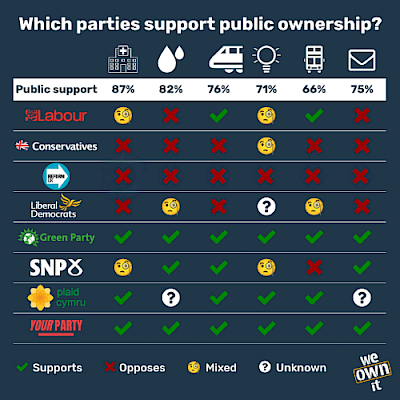
So we are stuck in a mess of our own making. Not just the politicians, but each of us individually, because we do have a democracy of sorts. We, the electorate, are, at the moment, able to speak freely & protest. In the case of privatisation for example we can see that it has failed us. The statistics show that a majority want our vital services in public hands. 

https://weownit.org.uk/site/assets/files/59129/party_scorecard_for_link_in_bio.400x0.png 

We just need to make our politicians see that they need to follow the "will of the people".  But you the people need to use your powers & vote. Turnout at the 2024 general election was 59.7%, which was the lowest at a general election since 2001. If you don't participate, you can't complain! And you certainly won't change anything. 

Monday, 23 February 2026

Electric Vehicles & the Weather

I drove from Oxford to Minchinhampton & back a week ago. I thought I knew how bad our roads are living in Oxford, but I was wrong. My journey took me along the A40 & then cross country to Cirencester via the A4425.

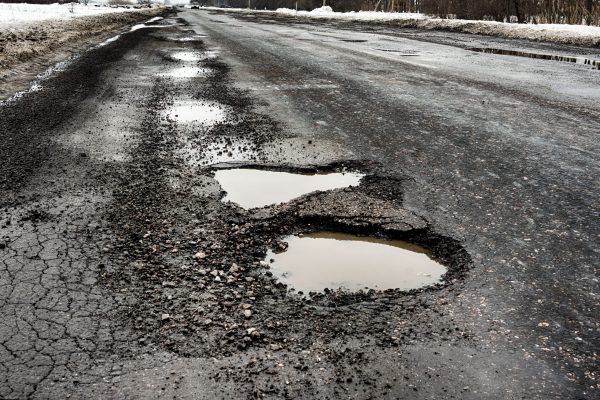
I was shocked at the state of the roads, whether A or B roads. We are all used to potholes now, but it was the frequency and the size - Both the depth, width & position of the holes. If they are at the side of the road & there is oncoming traffic you can't swerve out to avoid them. They must be lethal for cyclists. Similarly if they are in the middle of the road, where do you go? The damage being done to cars & the possibility of causing accidents must be high. 

https://www.aefaulks.co.uk/wp-content/uploads/2019/07/Pothole2-scaled-600x400.jpg 

Patching is obviously not the answer. All that does is to move the problem down the road, (sorry about the pun), because it is always a temporary solution. The cost & disruption caused by necessary proper maintenance required is obviously much higher. But why has this happened?

It must be a combination of 3 things, increasing volume of traffic, heavier vehicles & climate change e.g. rainfall. I can remember when my father was the first person in our street to get a car & everyone used public transport. We had trams in Birmingham. 

Now many families have more than one car, roughly a third. 78% of families have access to one or more cars. Add to that the increasing weight of cars. The average weight of new cars in the UK has risen by 400kg in 7 years due to SUV's & heavy batteries in electric vehicles. (Why & when did we move from estate cars to SUV's for extra space? Oh yes, like so much else, we copied America). Then multiply that by the huge weight of increasing goods vehicles & public transport. Climate change has meant that we have more frequent extremes of weather, named storms with much heavier rainfall & stronger winds, longer periods of high heat & drought. The only thing that doesn't seem to have increased is frost & extreme cold. But that too adds to the damage. 

It's a perfect storm, (again sorry about the pun), of circumstance added to years of lack of maintenance under the last conservative government. Between 2017 - 2023 council road resurfacing on A roads fell by 37%. The backlog of maintenance funding reached £16.3 billion in England & Wales. The focus was on reactive patching rather than long term preventative resurfacing that is much less cost effective. Austerity has put us where we are in so many areas. Local authority spending was cut by 25% betwween 2011 - 2020 for supposedly "non essential" spending.

The chickens have come home to roost. Bad short term decision making has resulted in huge problems in all of our infrastructure & services. That is the inheritance the labour government  has to deal with. Add to that the fact that the public allowed it all to happen. We could see what was happening & we didn't do enough to hold politicians accountable. 

The right to protest, the right to accurate information & effective oversight, the right to hold decision makers accountable & face legislation & justice must not be eroded. We are in a mess & getting out of it is our responsibility. We will have to pay, one way or another. Inaction is not an option.  

Friday, 20 February 2026

Diagnosis & Fear

Humans have the capacity to communicate through spoken language. We also give clues as to how we feel through facial expression & body language. We are unique. We also have the brain capacity to be able to think & understand all of these & more.

What has that to do with Diagnosis? 

I am beginning to think that our need to have a name, a diagnosis of a medical condition, might occasionally not be advantageous. I wonder if it is too simplistic. Obviously if you have a cancer it is important to know what type & hopefully get it early when it is treatable. That must be true of many conditions. In order to treat successfully medics need to know what they are dealing with.

I think I am concerned more about "neurodivergence" & "mental health" issues. I do wonder if we are given a label we live up to that label. If I have a physical diagnosis there is usually strong scientific evidence & symptoms for that diagnosis. Hopefully if the diagnosis is correct the treatment will help, if not cure. 

Empiric evidence - which is based on experience, without precise knowledge of the cause or nature of the disorder is less reliable & is dependent on the skill & experience of the practitioner. We have devised question & answer tests for neurodivergence, but is that reliable? Divergence & difference is actually normal.

I think my point is that human beings are incredibly complex systems which include physiology & psychology. What we are at birth, our genes, can be modified by experiences - Nature & Nurture. The thing that troubles me today is that we have become very risk averse. Parents are more afraid for their children than in my childhood. Children don't have the freedom & life experience that I did & actually my daughter did too. 

We have also become more culturally afraid. I actually think that the public is being kept in a state of permanenet fear by politics worldwide. We are afraid of the international situation, (wars, rogue leaders...), climate change, food, water & energy security, privatised services not working, the list is endless. We are made to feel powerless. Cynically I believe that this is deliberate at some level, so that the powerful can retain that power by convincing us we need them to solve everyhting. 

All of this is perpetuated by the press & media that constantly bombarding us with the current news reason to be afraid. There is endless diagnosis of whatever that is, with "experts" being hauled in to give their views, which are mostly pure speculation. It might happen, but the chances are it won't. How much postitive news do we hear?

I do think my parents generation & my generation were more resiliant. Shit happens, we understood that & we got on with it. We didn't expect or get a diagnosis or a label to put on it. We knew we just had to deal with it. 

Living with fear stops us taking risks, and if you don't go out on the branch, you're never going to get the best fruit. - Sarah Parish 


Tuesday, 17 February 2026

Unintended Consequences

My house was completely re-designed, gutted & refurbished. I am delighted with it. I had an expensive quartz worktop installed in the kitchen. In order to protect it I put a clear plastic tray where I stack the dirty dishes. Over time I discovered a discolouration in the quartz underneath. Not a spillage or stain, something within the very light coloured quartz. Uncleanable. Apparently it's due to UV light from the south facing window. A known issue, but not on the website of the company supplying the quartz & not known to me. A completely unintended consequence. Very annoying.

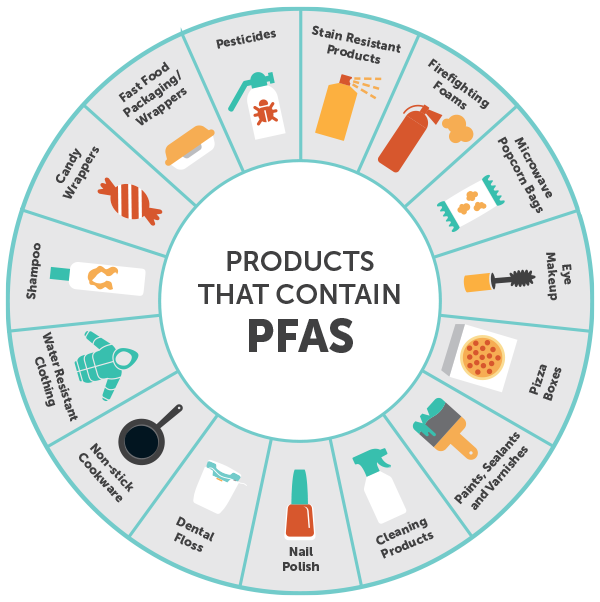
Yesterday, driving home, I listened to "Toxic" on Radio 4. All about "forever chemicals" like PFAS. These have been man made since the 1940's and are grease, water & heat resistant. Really useful, we all thought. Widely used & present in almost everything - non-stick pans, waterproof clothing, food packaging, cosmetics, the list is endless. Also prevalent now in drinking water, the environment & us. They are extremely persistent & bioaccumulate. Unfortunately they are also linked to serious health risks - cancer, immune system disruption, fertility & developmental issues. Who knew that something so useful could be so dangerous? 

There have been three types over the years - PFOA, PFOS & the latest PFAS. There are over 10,000 different types. They all persist in the environment & our bodies for decades. We have only just woken up to the harm of these forever chemicals & governments are finally going to monitor their presence & do something about their use. It's a bit late though. They are already literally everywhere.

What long term effect will the presence of these chemicals have on both the environment & us? How long have people been aware of the dangers posed to everything? Did manufacturers of these chemicals do enough research into side effects? Or were they simply focussed on their profitability? Did they hide the issues, as has happened so many times before? For example as the petrochemical industry & the drug industry did?

Our fixation with growth & profitability. Our fixation with making life easier because we are so busy & are so time poor. Our heedless march into the future & the unknown. Our lack of interrogation of the possibilities, good & bad, attached to change. Our lack of money & incentive to research & do due diligence. All of these are coming home to roost.

It's a perfect storm leading to disastrous unintended consequences. We need to stop & really think. 

https://www.faypwc.com/wp-content/uploads/2023/03/PFAS-Products-Wheel-1.png

Monday, 9 February 2026

Nationalisation versus Privatisation

Nationalisation is public ownership of private assets, industries or companies. It's often done to manage monopolies, market failures or secure infrastructure. The aim is to prioritise public interest over private profit & ensure service quality & efficiency.  

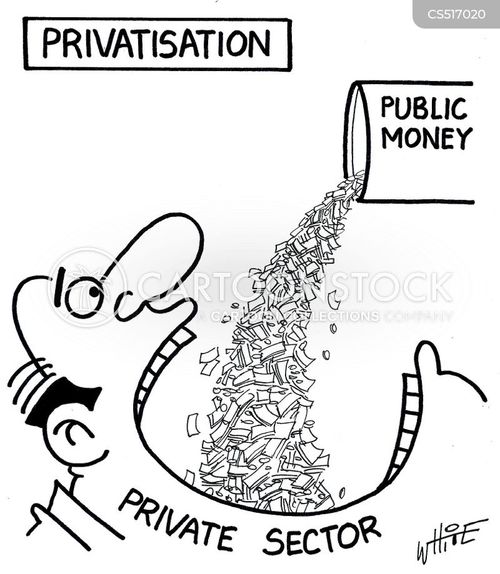
Privatisation is the transfer of ownership of assets, services or industries to the private sector. The aim is to increase efficiency, reduce government debt & foster competition.

As with everything there are pros & cons for both. 

Pros - Nationalisation is supposed to increase investment in infrastructure, lower prices for consumers, ensure better working conditions for workers & improve strategic control. Cons - Lower efficiency, lack of innovation, political interference & high costs.

https://s3.amazonaws.com/lowres.cartoonstock.com/-privatisation-privatize-private-money-greed-twtn2474_low.jpg

digital infrastructure. 

What on earth were our government thinking? Well obviously they wern't "risk assessing" or considering possible & probable outcomes in the face of changing circumstances in the future. What they were doing was two things - raising money so that they could keep taxes low & create wealth, thus retaining power. But not only wealth for the country, but for themselves & their network of business friends & acquaintances.

It all started with Mrs Thatcher, but her party has continued the rot for years. So now we are in real trouble & it is debatable whether we can extract ourselves from the mire. We need effective long term planning, but our political system is not set up to do that. Decisions are made in order to keep power in local elections & ensure a second or third term in government. 

We really need highly intelligent, experienced & skilled people to do the evidence based 5 -10 year planning. Not politicians, who generally know nothing about their brief when they become ministers. It used to be the job of the Civil Service. But now we have lobbyists & special advisors. As of March 2025, there were 130 special advisers (SpAds) employed across the UK government, representing roughly 0.02% of the total Civil Service. While the number of registered lobbyists is not centrally capped, research indicates a significant "revolving door," with 31% of former special advisers moving into corporate lobbying or advisory roles.


Friday, 6 February 2026

Vetting Process

Vetting is a comprehensive, multi-step investigation of an individual's background, qualifications, and integrity before employment or partnership, particularly for roles requiring security clearance. Developed Vetting is used for government or police roles. National Security Vetting is used for government roles. A security & risk assessment is part of the process & includes financial checks (credit, bankruptcy), social media reviews, and, in some cases, interviews with security officers regarding personal life, associates, and family. For high-level vetting, inspectors investigate potential vulnerabilities, such as financial debt, relationships, or past behavior that could lead to coercion or corruption.

Honestry is mandatory & dishonesty shows a lack of integrity & should result in failure.

The Propriety and Ethics team in the Cabinet Office undertake the due diligence process. Mandleson was supposedly subjected to Developed Vetting. After his ambassadorial appointment he was apparently National Security vetted by UK Security Vetting. 

The question is why, in view of all this, he was ever appointed to such an important role? He obviously lied, but why was he believed? Or was this simply a bad political decision for expediency reasons? Questions were supposedly put about Mandlesons ongoing relationship with Epstein. But wern't  his answers thoroughly checked?

https://ih1.redbubble.net/image.2974599749.6518/fposter,small,wall_texture,square_product,600x600.jpg 

The Met is conducting a criminal investigation into the leaking of sensitive information to Epstein & the relationship with him, so we won't get full discolsure until that is finished. But there are serious questions about PM Starmer & chief of staff McSweeny, (who was a protege of Mandleson & pushed for his ambassadorial appointment). 

This is serious enough to bring down not only the prime minister but the government itself. If it were an isolated error of judgement it might not be so bad, but it is only one of several policy reversals, "U-turns," and political misjudgements, since labour came to power in July 2024;- 

  • Freebies Scandal 
  • Winter Fuel
  • 2 Child benefit 
  • Tractor Tax
  • Universal Credit 
  • Employment Rights
  • Worker Status Reform
  • House of Lords Reform  

I've probably missed some. But you get the picture. 

I'm prepared to believe that Starmer does have the right purpose, attitude, morals & values. But his great fault is perceived lack of good judgement. Parliament is a hornets nest. The hornets will attack weakness. 

Labour were out of power for 14 years. You would think that during that time, as well as being an effective opposition, they would have prepared for government. Especially as it became more & more obvious what a complete mess the consevatives had made of their time in government. The public were more than ready for change. We also wanted a clean government, without all the sleaze & entitled arrogance that typified particularly the Johnson years. We wanted a government that actually represented the people's needs & wishes. 

Now we have chaos & a real possibility of a Reform government. Things couldn't be much worse at such a critical time internationally as well as here in the UK. 


Tuesday, 3 February 2026

Unlordly Lords.

Reform of the UK House of Lords has been discussed seemingly for all of my adult life. The House of Lords Reform Act 2014, allowed for the removal of peers who are convicted of serious offences and sentenced to imprisonment. But there are also questions about the fact that they are unelected & about the sheer numbers, currently 846! It is the largest upper house in the world and, as of late 2024, was roughly 25% larger than the House of Commons. The majority are life peers, alongside 26 archbishops and bishops (Lords Spiritual) and a remaining number of hereditary peers. In other words most of them are political appointees - 740 approx. 282 were conservative, 230 are Labour, 177 are crossbench. In addition  there are some lords who are ineligible to attend.

I am not impartial on this issue. I do think that a second chamber is beneficial. However members should be there because of their qualifications, experience & expertise. I also expect them to show evidence of ethics & service to others. They definitely should not be political appointees or generous donors to one party or another. They should be appointed by an independent committee representing the British people. Nor should, as was customary historically, top-level officials, such as Permanent Secretaries, Cabinet Secretaries, and Heads of the Diplomatic Service be given peerages for doing their job. I also think there should be parity between the upper & lower houses. Why on earth is it acceptable for the unelected Lords to be so much bigger than the commons? The current fillibustering of the assisted dying bill by a small number of lords is unacceptable, when it has beeen passed by the commons & the majority of the public support it. 

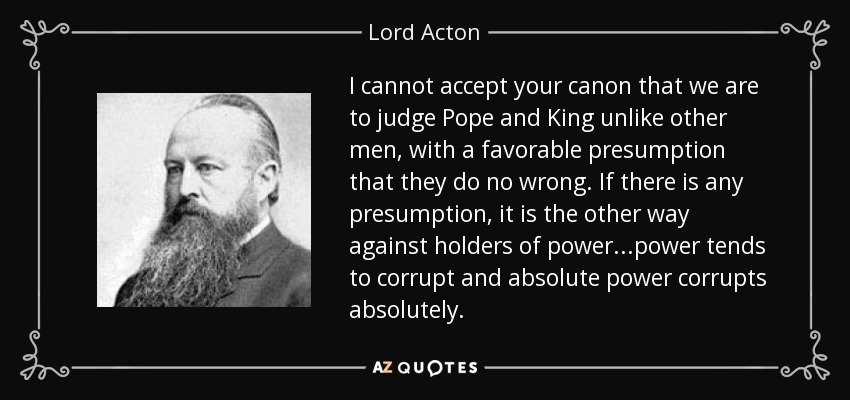
Then we get to the question of ethics as currently being discussed regarding Peter Mandelson who has had to resign twice from the cabinet, once as Ambassador to the USA & currently from the labour party. He is the grandson of Herbert Morrison, a labour statesman in the 2nd world war & postwar period, who would no doubt be shocked at the current scandal.

https://www.azquotes.com/picture-quotes/quote-i-cannot-accept-your-canon-that-we-are-to-judge-pope-and-king-unlike-other-men-with-lord-acton-81-68-50.jpg 

I haven't met Mandleson, frankly I wouldn't want to. I can only judge him by his actions & he seems to me to be very smug & self serving. Shady dealings with the rich & powerful seem to have followed his political rise to prominence. He seems to value wealth & power above all things & be prepared to do almost anything to move in those circles. At the very least his judgement seems to be extremely questionable. It's a pattern we see all too often in prominent men. He is not alone. Several lords have criminal records;- 

Lord Ahmed of Rotherham, convicted in 2021/2022 of serious sexual offences and attempted rape. 

Lord Brocket, served time in prison for insurance fraud involving valuable cars. 

Lord Sewel, resigned from the House of Lords in 2015 following a scandal involving alleged drug use and improper conduct, which led to a police investigation.  

Lord Archer, convicted in 2001 of perjury and perverting the course of justice

Lord Black of Crossharbour, convicted in the United States in 2007 of fraud and obstruction of justice.  

Lord Watson of Invergowrie, convicted of wilful fire-raising. 

Lord Taylor of Warwick, jailed in 2011 for false accounting. Lord Hanningfield, also convicted of false accounting.

Jonathan Aitken, former MP and minister who served a custodial sentence for perjury and perverting the course of justice. 

Mandleson is not alone & those are only the ones who have faced the full force of the law. 

Instead of talking about reform & setting up committees our politicians need to act & reform our government institutions. They are disfunctional. They do not serve us. We should not tolerate this abuse of power in the name of democracy. Politics & democracy have become dirty words.  

Wednesday, 28 January 2026

Wages, Salary, Inflation & Devaluation

Salary is a fixed, consistent amount of pay, (usually annual), regardless of hours worked, often featuring benefits and no overtime pay
. Wages are paid based on an hourly rate, fluctuating with hours worked, often including overtime, and common in retail or manufacturing roles.
 In simple terms professional roles tend to be salaried while manual roles are waged.

Inflation is a rise in domestic prices, reducing purchasing power, while devaluation is a fall in a currency's value relative to foreign currencies. It's often triggered by market forces or deliberate policy, making exports cheaper and imports costlier. High inflation typically leads to currency devaluation
. Generally inflation erodes what money buys inside a country, whereas devaluation weakens money's worth against other countries' money. Both are deeply linked as high inflation usually causes devaluation, and devaluation itself can fuel more inflation.

So far so good, although anything to do with mathematics isn't my forte.

This leads me into thinking about the people striking because their current wage or salary is less than in previous years in real terms. UK doctors' pay claims, led by the BMA, focus on restoring wages eroded by inflation, with recent actions pushing for significant uplifts. For example doctors argue pay has fallen significantly, (over 20% in real terms for some), since 2008. This is called pay erosion & they want pay restored to 2008 levels. You can find current pay levels for all doctors on the internet, so I won't give them here. 

My point is that this position seems to be completely untenable to me. Money & commodities fluctuate according to circustances. I imagine that doctors are not alone in being able to say that what they earn today is not worth what they earned in 2008. All employed people are subject to the same market forces. In any year pay increases will depend on what those forces are & how much money is in the kitty. Especially for so called public employees, teachers or the police for example.

What also seems untenable to me is that we have expectations that wages or salary will increase every year. Not only does that depend on a countries wealth, it also depends on how well people do their job & their productivity. It is well known that the UK, as a nation, is way behind in productivity. The UK's labour productivity consistently lags behind the US, Germany, and France, with output per hour worked significantly lower, around 20-40% below the US and 20% below major EU economies. This is largely due to underinvestment in capital and skills, slower growth since the financial crisis, and weaker competition/technology adoption in key sectors like retail and finance.

Finally, I think our whole wage / salary structure is completely unbalanced & rooted in class structure & history. As with so many areas in the UK, we need a complete overhaul & re-balancing to a fairer system. The gap between the "haves & have nots" is not working for us in the 21st century. As a lifelong liberal socialist I do think that withdrawl of labour is a right, but surely not for everyone. Surely there are occupations that are so vital to health, well being & the economy that there should be another mechanism? Possibly, given that so many of our organisations depend on goodwill to operate, working to rule would be far better. 

We need to end this cycle of disruption & get our act together. Especially as we are now into the age of technology & AI which will change things drastically.

If you want to succeed you should strike out on new paths, rather than travel the worn paths of accepted success. - John D. Rockefeller 


Sunday, 25 January 2026

Think Before you Speak

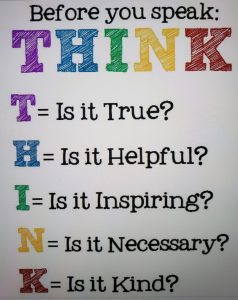
Basically, pause to consider what you are going to say & avoid impulsive, emotional & regrettable comment. Whatever we say will be open to misinterpretation & misunderstanding. We all interpret comment differently. 

Humans communicate through body language, facial expression and language itself. Within spoken language there is nuance - the actual words used, the tone of voice, the speed of delivery, (pauses are important)...The listener has to decode what is being said & how it is said. It is a skill, because the listeners preconceptions & emotions colour how they hear & respond to what is said.There is uncertainty in verbal communication which can cause problems.

We all need to be careful about what we say & how we say it, whether it is written or spoken. We do need to engage our brains & try not to respond emotionally. I have posted before about how what we write can be easily misunderstood. Perceptions vary.

All of this is true for everyone, but immensely more important for people in the public eye & vital for people in power. So when we have politicians who say exactly what they think, without accurate information, or care for the impact they may have, I am very concerned. Politicians supposedly have access to information & briefings that we do not have. They have a multitude of so called "special advisors". They employ researchers. They have access to any & all of the information they need to make considered decisions in the interests of their electorate.

That means that what they say should be true, accurate, intelligent & pertinent.They should be allowed to say "I don't know" or I will find out". They should be given time to enquire & reflect. Then they should speak & we should be able to rely on the veracity of what they say.

Unfortunately this is not the case with so many people in power today. To have someone in a very powerful position who has no relationship with truth or a moral compass is extremely dangerous. There will always be people who follow whoever speaks loudest & has presence, charisma or wealth. There will always be people who follow the herd & don't enquire into the truth. There will always be people who think their own self interest is more important than anyone else's. History has proved that time after time.

Eventually all regimes end. That is no consolation to the people who have paid the price for mismanagement & corruption. Sadly if you get rid of one dictator there is usually another waiting in the wings who could be even worse. 

We are at a crossroads worldwide. We cannot afford to let the dictators win. We all need to think & use our collective power.


Monday, 19 January 2026

The Psychology of Dictatorship

Pathological Narcissm - inflated sense of self, superiority, and entitlement, requiring excessive admiration, with power serving as a psychological "prosthesis" for inner fragility.

Psychopathy - callousness, lack of remorse, manipulativeness, impulsivity, and emotional shallowness

Need for Power - authority shores up inner insecurity and compensates for vulnerability.

Deep Seated Insecurity / Poor Self Esteem  

Lack of Empathy 

Vindictiveness & Manipulation - can be charming and skilled at exploiting human psychology, using propaganda, lies, and inflammatory language to destabilize populations and foster dependency.

Persecution & Paranoia - behavior becomes more malevolent as they consolidate power and eliminate perceived threats. 

Nationalism - the nation becomes an extension of the self; increasing national power serves to strengthen personal power.

Control - creating or exaggerating threats (enemies or minorities) to unify followers and justify oppressive measures, fostering dependence.

These traits often develop from a mix of genetic predispositions and early life experiences, with psychopathic traits sometimes encouraged in certain societal contexts, becoming disastrous when combined with absolute power. Dictators do not rule through fear and violence alone; they also rely on the psychology of their followers. Psychological processes such as obedience, conformity, and fear allow citizens to adopt the leader's ideology. The use of propaganda, media control, and the creation of "enemies" (often minority groups) helps to unify the population and cement allegiance through a shared sense of threat.

I have to admit that the above is the result of research, not just my own understanding of the subject. I couldn't have put it as concisely. I can make a list of current leaders who fit the picture very precisely. I am sure you can too, unless you are a follower of one of the leaders I am thinking of. In which case you will not be able to see what I see.

The fact that we currently have so many leaders in so many different parts of the world who fit this description is both deeply worrying & bodes ill for the future of our world as we know it. We are becoming habituated to serious instability in our politics & decision making. We are in danger of thinking that we cannot control the onward march of these leaders. 

We need to wake up, accept the truth of the situation & do something to stop them. Or we will be marching into a future for my grandchildren that I do not want to contemplate. Being passive & appeasing will not work. That's how 2 world wars started. 

Friday, 16 January 2026

Change & Belief

Politicians say we need change. The public certainly seem to want change. Buddhists believe that change is inevitable & we need to accept that & adapt to new circumstances. Change is very difficult to manage & deliver though.

Personal change should be under our control, but it is very hard to achieve. It necessarily involves putting aside the patterns of thinking & behaviour we have developed over many years, which are imprinted in our brain. It demands a sense of purpose & strong will to persevere. First we have to accept that we may have been misguided or wrong, then we have to modify beliefs & behaviour. 

Change on a societal or global level seems an exceptionally difficult thing to achieve. There are not only millions of individuals involved, but also countries. There are 195 countries in the world, comprising 193 United Nations (UN) member states and 2 non-member observer states (Vatican City/Holy See and Palestine). However, the exact number can vary slightly (up to 200+) depending on recognition of states like Taiwan or Kosovo. That represents huge variation in culture, ambition, attitude & development. Achieving consensus on what to change & how is seemigly impossible. 

Robert Jenrick defected from the Tories to Reform yesterday, making the 16th conservative to change allegiance. Notable among them were Nadim Zahawi & Nadine Dorries. On the surface it could be seen as a matter of conscience, a genuine change of mind. Or, if you are of the cynical frame of mind that I have, it could be "rats leaving a sinking ship". I am left thinking that the change of party is more about personal interest & ambition than genuine belief in Nigel Farage & Reform. 

How are we the public to trust politicians who "blow with the wind" rather than doing what is genuinely best for the future of the UK? Our country has been hugely damaged by 14 years of tory rule. All of our systems are at breaking point because of tory mismanagemnet, privatisation, cost cutting & lack of oversight. Not to mention the corruption & "jobs for the boys". 

There does need to be substantial change in the UK. We need to "put our house in order". Currently I'm not convinced that Kier Starmer & the labour party are the ones to do it. While I do believe that if new information / evidence comes forward, politicians need to be able to change their minds. I do not believe that lack of preparation & evidence based decision making is acceptable. It only results in vacillation & that is not a good look.

In order to achieve real change for the better we will all have to pay a price in the short term. We need politicians with the balls to take us down that road willingly & honestly.

 https://media.istockphoto.com/id/1166518479/photo/motivational-and-inspirational-wording.webp?s=1024x1024&w=is&k=20&c=WCnutAPMuwop9QCFnoUKwVk5ojBUvGYZCAeRhEHycmE= 

Sunday, 11 January 2026

Respect

I grew up in a world where respect was expected. I don't think there was a concept of earning respect. As a child & a teenager I was expected to respect my parents, teachers & adults in general, regardless of whether they were worthy of that respect. You didn't interrupt, you certainly didn't answer back or have views of your own about situations. You "knew your place" in the hierarchy & it was very low down. As a child you were "seen & not heard".

I'm glad to say that has changed. In some ways for the better, we do expect people to earn respect. But also there is the growing trend for a complete lack of respect for people & concepts that seem to me to be necessary for the smooth running of society.

In part that is because what seemed black & white is now several shades of grey. The world we live in is highly complex. For example respecting the borders of sovereign countries. 

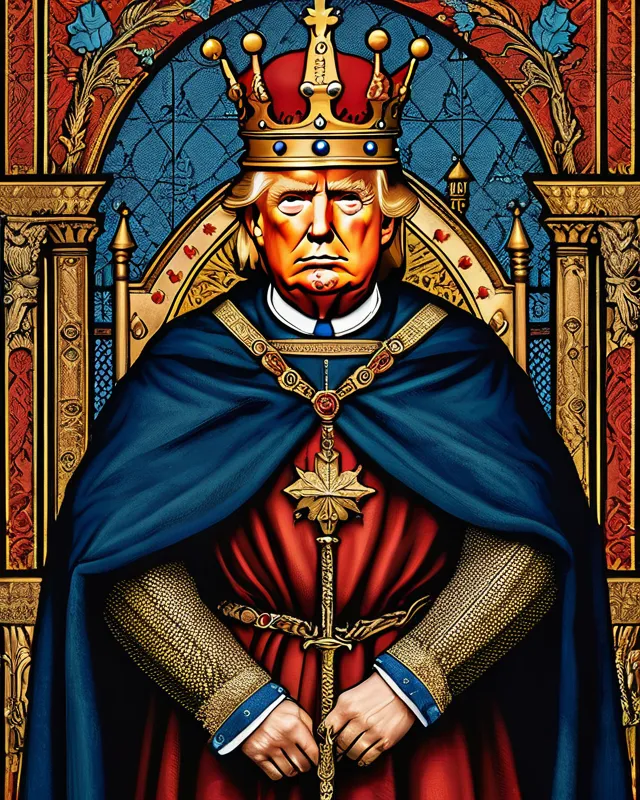
Take the USA invasion of Venezuela - Maduro did not win his countries election, so was an illegitimate president. In 2021 the ICC opened an investigation into what was happening in Venezuela. Does that give the US the right to capture Venezuelan ships, bomb Caracas & extract Maduro to the US? I am unpersuaded. I think this is simply Trumps transactional, deal making, bullying, personality. In simple terms he wants to control the oil production & minerals, notably bauxite, coal, gold, iron ore. The state controled most of the country's vast mineral reserves, Trump wants that control & the cash that goes with it.

He has no respect for the rule of international law only Trumps law. The Monroe Doctrine of 1823 is now the Donroe Doctrine. He is open about aspirations in Greenland, Columbia, Iran, Mexico & Cuba. The chances are that the aftermath of this will follow the pattern of the history of American intervention abroad, as warned by the International Crisis Group & the New York Times in October. The fall of Maduro could lead to violence and instability, the prospect of violent chaos as armed factions competed for power.

https://r2.starryai.com/results/1048685473/bc701e95-1899-4469-b7db-a83daf5dcc5f.webp

If Trump succeeds & is not openly challenged the flood gates open for Netenyahu, Putin & Xi Jinping to do even more than they already have. They have shown no respect for sovereign boundaries, human life & infrastructure. Trump is not the only leader with delusions of grandeur, avarice & power. At the moment politics & politicians simply do not know how to deal with these "leaders"  

We have to return to a world where there is respect for people, culture, boundaries, resources & the world we live in. If we don't we are simply self destructing. 


Thursday, 8 January 2026

Caring

Do we know how to care for eachother? Is our world envied health service really capable of caring for the sick & disabled?  I ask this while understanding all of the complex parameters of the questions - time, money, people available - skilled & willing, equipment, drugs....

The reason I ask is because I am old enough to remember what the NHS used to provide & what my generation understood to be reponsibility & duty of care. Also because I have just been quite ill for 10 days & had to navigate todays NHS.

However I phrase this it will probably annoy & upset people. But, although I think there have been huge improvements in technology & medication, I think things have changed at a personal level to an unacceptable degree. While I think that medics care, there are limits to what they can do & they have accepted things that shouldn't be accepted in terms of patient care. 

I have had a nasty viral chest infection which turned into bacterial Bronchitis. It started on the 29th December. By the 5th January I had felt really ill for 4 days, was coughing continuously, extremely congested, very breathless, aching all over & exhausted. I went through the online system to try to get an appointment. I am able to do that, many of my age aren't. I got a phone triage from the surgery, although I could barely talk. I was told to come into the surgery.

Really? Is that appropriate. I'm nearly 81 with several chronic conditions including heart failure & a pacemaker. I live alone. Fortunately my lovely daughter, who is a teacher & started term that day, was able to take me. But the triage person thought it was fine for me to get a taxi. I waited for quite a while in the crowded waiting room. I was the only person wearing a mask so that I wouldn't pass the infection on. I saw someone who wasn't a GP, but I don't know what qualifications she had. She prescribed anti biotics.

Not to mince words, a very nasty chest infection, at my age, with my medical conditions needs to be taken seriously. 

So, again fortunately, my daughter was able to take me home, picking up the meds on the way.  I know, only too well how fortunate I am.

Then on the 7th I got up & was coughing up blood. I think I had actually started the day before, but thought it was bacterial phlegm. But on the 7th it was very obvious. I have to say I was worried. I've never had that before. So I phoned the surgery & managed to explain to reception. A doctor phoned me & asked me to come to the surgery again. Quite honestly I was amazed. I told him I felt too ill to do that & he said he would send a paramedic.

The paramedic came about 1pm & did the obs. I have no idea whether he reported back to the GP. I certainly haven't had any follow up from the GP. 

I know that GP's have a big workload. I know there aren't enough of them. But I do wonder if my experience has anything to do with the new contracts they agreed a few years back that made them in charge of the finances & changed their work patterns, especially out of hours duties. The GMC has definitely become more militant & doctors seem to be far more willing to strike, despite the impact on patient care. 

Fortunately I am capable & independent & have family nearby& good friends. But this has been a very difficult time & I am still feeling quite unwell. I accept that many patients have access to information about illness & care. I accept that they need to take reponsibility for their own health & welfare. 

Ben Jennings opinion cartoon 13.01.2023 

But I am left with the feeling that the NHS has had a care bypass. They are tolerating things that should not be tolerated. We all, patients & medics, need to put this right & make the politicians listen.


Tuesday, 6 January 2026

Mother & Child

Mother and child iconography has evolved from ancient, symbolic representations of divinity and fertility—such as Isis and Horus—to the idealized, formal "Madonna and Child" in early Christian art. The earliest images go back almost 10 millenia to civilisations like Catalhoyuk, Uruk & Eridu.

https://miro.medium.com/v2/resize:fit:640/format:webp/1*AREOPKIYIsWR2eZ5QGtvwg.jpeg 

The best known iconography is the virgin & child. This has arguably led to the expectations we have of what a mother should be. More & more we have contradictory expectations of motherhood today. We are ambivalent, possibly in part due to the "womens lib" movement. Today's women have to juggle various social roles, being an independent woman, a partner, a mother and a worker. There is an inherent tension in womens devotion to their children & their need for self fulfillment. There is also the constant necessity for women to go out to work & earn. 

There is also the equality dimension between men & women, which has improved, but is by no means widespread. Women disproportionately handle unpaid care work and part-time roles. Significant gender pay gaps persist, particularly for part-time workers, and workplace inequality remains a long-term issue. In late 2024, 71.8% of women aged 16+ were in employment. Women are predominantly employed in the health and social work sector (76% of workers are women), education (76% of teachers), and wholesale and retail. This is a waste of talent & skills. Women are capable of far more, but are still unable to access better jobs because of the demands of childcare & the patriarchy which still exists.

How do we change this? For a start we need to value mother/parent hood & childrearing far more. We also need to ensure that the childrearing is more equally shared by both parents, whatever sex they are. Some men are far more involved now, but there is still a higher expectation on women to put themselves last & be more caring. 

Until we recognise that a child needs both male & female carers & role models we will be failing our children. Girls need role models of how to be a woman & how to relate to men. Boys need role models of how to be a man & relate to women. It isn't rocket science & the role models don't necessarily have to be the biological parents. 

Parenting is a skill that needs to be learnt. Currently it's a skill that many parents don't feel that they know enough about. They need support, encouragement & knowledge. Well brought up, balanced children are our future. We ignore that & we will pay a societal price.