Search This Blog

Monday, 8 June 2026

Uniform

When I went to Grammar school at age 11 in 1956 my parents had to buy me a whole new set of clothes & shoes - Startright shoes, very expensive. Velour winter hat & summer one too, gym kit, even navy blue knickers! Summer & winter uniform, including a blazer, only available from one shop in Birmingham. It was an expense that I now realise they could not afford. Up till that point my mother had made most of my clothes. 

In theory school uniform is good because it levels the social playing field, reduces peer pressure & limits fashion related issues. It also possibly promotes school unity. Arguments against include suppressing individuality, creating financial burdens & the clothing being uncomfortable or restrictive. I have fluctuated in my opinion over time as a teacher & headteacher. I actually hated wearing my uniform at grammar school, especially the hat. When I was a head teacher I was against uniformity & in favour of individuality. Now I think that the availability of cheaper supermarket clothes & flexibility of which items children wear or don't wear is a good compromise. There is more choice. 


We humans seem to like uniforms & uniformity. The armed forces are immensely proud of theirs. Healthcare workers, emergency responders, the police, transport staff, sportspeople, construction workers, ....Even trades like painters & decorators. It does make sense in many ways. These people are immediately recognisable. Their uniforms are often protective. They don't have to risk damaging their own clothes & replace them. 

But people are not uniform. We are all individuals with commonalities & different traits & beliefs. The concerning thing today seems to be the tribalism that is widespread. Left wing, right wing, extremists, religious beliefs, conspiracy theorists, feminists, misogynists, racists, ..... We humans are social, we want to belong, we like to be in a group. We don't want to be outsiders. We dislike being ostracised. Isolation & loneliness are common societal problems in all age groups. Sometimes that can lead to "groupthink" - a psychological phenomenon where the desire for harmony or conformity within a group results in irrational or dysfunctional decision making. 

Why? Maybe we are too afraid of difference. Maybe we are not confident enough in our own opinions. Maybe we just want to be whatever "normal" is. But being critical, dissenting, is not wrong. There is definitely pressure to conform, but that is not good. We all need to listen to differing opinions, look for evidence one way or another & then make up our minds. 

We all need to be able to speak out & take action. 


Friday, 5 June 2026

Stimulus, Action & Reaction

A stimulus is a detectable change. Action is the accomplishment of a thing usually over a period of time, in stages, or with the possibility of repetition. A reaction is any action, feeling or behaviour that occurs as a response to a specific stimulus, event or situation. The term spans multiple disciplines, covering psychological responses, physical symptoms, and scientific interactions. 

I find myself wondering why, for so many people, the action / reaction is often abuse. Both verbal & physical. Currently there is the news about the rioting resulting from the police handling of the murder of a 19 year old student Henry Nowak by a Sikh, Vikram Digwa. Also the Jewish concerns about racism in the NHS. 

In both cases surely the first reaction should be concern at what happened. Then, shouldn't we all want to know the actual facts of the case before we weigh in with our reactions? Shouldn't we be well aware of how both of these things are politically charged & subject to misinformation & conspiracy theories. Shouldn't we turn to verifiable sources for information rather than the hotbed of social media & trolls?

What is it that makes people so quick to anger & turn to physical violence & verbal abuse? How, in a so called democratic & civilised society, does that become expected as the norm? Surely we all know what is acceptable behaviour & what is not? We know what is criminal. How has mob rule become such a frequent reaction?

Apparently this behaviour is driven by a complex interplay of biological dispositions, social conditioning, cognitive biases & situational triggers. These behaviours feed off the roots of frustration, power imbalance & the erosion of individual accountability. Individuals or groups feel marginalised, deprived, or threatened & aggression can become a mechanism to regain control or assert power. Impulsive aggression is linked to neurobiological elements (e.g. serotonin imbalances) and psychological factors like a lack of empathy or unresolved childhood trauma. People who witness domestic violence, bullying, or systemic discrimination growing up are significantly more likely to normalise and replicate these behaviours.

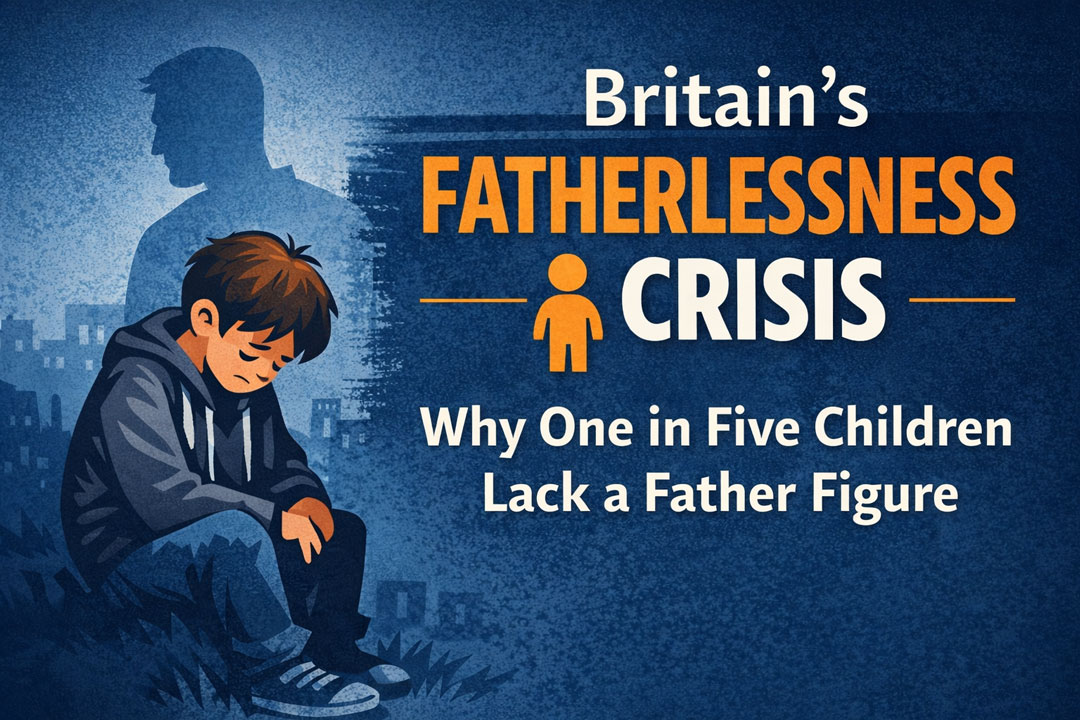
Recent research looked into single mother households in the UK. 9 in 10 of single parent households are headed by a mother, which is approximately 84 - 89% of single parents. An estimated 2.5 - 2.7 million children do not have a father figure or male role model. Single mothers do an amazing & difficult job on the whole. But children do need good male & female role models to learn how to be adults. Both girls & boys need a consistent, good, male influence, which doesn't necessarily have to be a biological father. 

https://genuinefutures.co.uk/news-resources/britain-is-facing-an-epidemic-of-fatherlessness-and-the-cost-is-being-paid-by-our-children

https://genuinefutures.co.uk/wp-content/uploads/2026/01/Fatherlessness-crisis.jpg 

However, many people who have experienced these factors manage to become adults who do not exhibit this anti social behaviour. There must be something else in play. Whatever the causes, the behaviour is completely unacceptable & is very destructive. Innocent people are caught up in the violence & abuse. 

We must find a way to channel parental & educational influences to counteract this. We must accentuate good role models. We adults must lead by example & be prepared to call out unacceptable behaviour. 

We must not pass by on the other side.